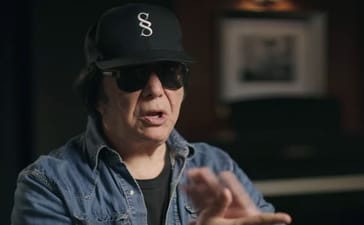
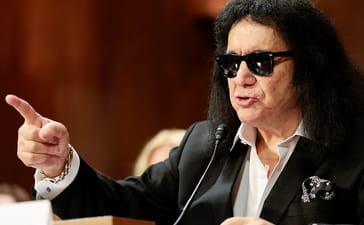
Kiss’ Gene Simmons appeared before a Senate subcommittee on Tuesday, delivering a seven-minute speech advocating for a new bill that would require radio stations to pay artists for playing their music.
Legendary Kiss bass player Gene Simmons appeared before the United States Congress on Tuesday (December 2nd) to rally senators to pass the American Music Fairness Act, a bill that would secure payments for artists when their music is played on the radio.
In a seven-minute speech, Simmons would stress the importance of passing the bill that would force AM/FM radio stations to pay royalties to the copyright holders of the respective works played. As of writing, only songwriters get royalties from radio airplay and not the artists who performed the track. Simmons said that under the current system, artists are treated “worse than slaves” because, in his words, “slaves at least get food and water”.
Simmons would also share that some of the biggest artists of all time, such as Bing Crosby, Frank Sinatra, and Elvis Presley, “never got a penny for all the millions of times” their music was played on U.S. radio.
“If you are against this bill, you are un-American,” Simmons declared. “You cannot let this injustice continue. It looks like a small issue … But our emissaries to the world are Elvis and Frank Sinatra. And when they find out we’re not treating our stars right – in other words, worse than slaves; slaves get food and water. Elvis and Sinatra and Bing Crosby got nothing for their performance. You’ve got to change this now.”
The 76-year-old musician would also highlight how Russia and China pay both songwriters and performers for radio airplay, and that some countries have even withheld royalties from American performers because their artists don’t receive compensation for U.S. airplay.
“How do we dare come in second to Russia?” Simmons exclaimed during his testimony. “An alleged country led by a despot, when they do a better job of paying our King of Rock & Roll, and we’re going to stand by and not pay today’s artists and future artists?”
Simmons had appeared at the panel alongside Michael Huppe, the president and CEO of SoundExchange, a non-profit that collects and distributes digital streaming royalties.
Before Simmons would speak, Henry Hinton, a broadcaster and owner of four radio stations in North Carolina, would voice his objection to the bill, calling it “economically untenable for local radio broadcasters”.
“When new fees are imposed, free local radio’s only option is to cut elsewhere. Stations have to make the choice between covering local football games or paying new fees; between making their payroll, or sending more money to the recording industry — an industry currently making record profits, I might add.”
Simmons would acknowledge Hinton’s objection, stating that three of his four radio stations “may have to pay $500 when – not if –this bill is passed. What’s your problem?”
So far, the American Music Fairness Act has received public support from countless artists, including David Byrne, Randy Travis, Boyz II Men, and Master P. The timing of the bill hearing comes after countless artists have voiced their frustration with streaming platforms such as Spotify and the amount they pay artists, despite CEO Daniel Ek’s £600 million investment in AI military start-ups.
RELATED
MORE IN News