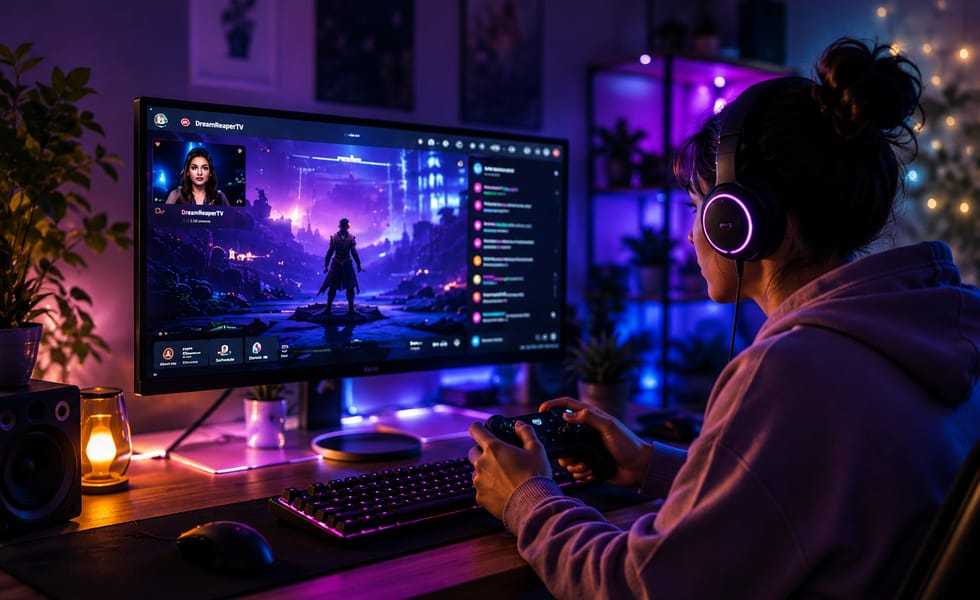
Digital entertainment in 2026 is increasingly defined by what happens after a person taps, votes, chooses or joins in.
Audiences still watch, listen and scroll, but the experiences holding their attention are often the ones that react back.
A multiplayer game changes around the people inside it. A live stream shifts when the chat takes over. A sports broadcast adds alternate camera angles, live statistics and audience polls. Even music platforms increasingly build discovery around personalised prompts, social sharing and real-time conversation rather than leaving listeners with a static catalogue.
The result is a digital culture in which participation no longer feels like an optional extra. It has become part of the basic expectation.
That shift also changes how people approach unfamiliar platforms. Audiences increasingly research the communities, features and broader context around a digital product before spending time with it. Specialist publishing has grown alongside that habit, including highly specific publications serving particular languages, regions and online interests.
That publishing often adopts literal, search-led naming. In Hungary, legjobbmagyaronlinekaszino.com is one example of a domain built around that convention.
The relevant behaviour is not limited to any one category. Across games, streaming platforms and creator communities, people increasingly want context before they commit their attention.
Choice That Changes the Room
Traditional entertainment usually asked audiences to sit back and follow a finished sequence. Interactive entertainment leaves more of the experience unsettled.
A player might change an avatar before the next round, vote on the direction of a live stream, join a temporary game mode or switch between camera feeds during a sporting event. None of those actions needs to be dramatic. Their value comes from making the experience feel responsive.
Fortnite’s virtual concerts showed how far that idea could travel, bringing large audiences into the same digital space for events that were part performance, part game and part social gathering. The format was unusual at the time, but the behaviour behind it now feels familiar.
Games, streaming platforms and social apps increasingly borrow from the same toolkit: live polls, temporary rooms, audience prompts, shared challenges and community-led events.
People are more likely to stay when their presence appears to matter.
Live Features Feel More Human
The appeal of live digital experiences is not always about scale or polish. Often, it is the opposite.
A creator noticing a comment, a teammate reacting over voice chat or a host correcting a mistake in real time can make a platform feel more immediate than something produced to perfection. Those small imperfections signal that the experience is unfolding with an audience rather than simply being delivered to one.
This helps explain why live streams, Discord servers and multiplayer spaces can hold attention even when the visual presentation is basic. The social layer gives people something a finished video cannot: the possibility that the next moment might be shaped by whoever is present.
For audiences used to moving between platforms, the boundaries between playing, watching and talking have become difficult to separate. Someone might watch a game on Twitch, discuss it in Discord, share a clip on TikTok and then join a session with friends, all within the same evening.
Each platform serves a different purpose, but together they form one connected experience.
The strongest interactive spaces understand that the audience is not simply consuming content. It is helping create the atmosphere around it.
Personal Progress Beats Endless Choice
Digital platforms once treated large libraries as the clearest sign of value. More games, more videos and more options were presented as an obvious advantage.
In practice, a huge catalogue can become exhausting. People rarely want thousands of choices at once. They want a useful next step.
Progress systems give shape to that decision. A saved character build, a ranked ladder, a listening history, a language-learning streak or a half-finished challenge creates continuity between one short visit and the next. Ten minutes can feel worthwhile when it leaves something behind.
This is why progress has spread well beyond traditional games. Fitness apps track weekly goals. Streaming services remember unfinished episodes. Music platforms build annual listening summaries. Learning tools use streaks, levels and reminders to turn a loose habit into a visible sequence.
The design works because it reduces the effort of returning. A person does not need to decide where to begin every time.
There is still a line between useful continuity and manufactured pressure. A streak that becomes difficult to abandon can make leisure feel like an obligation. More thoughtful platforms make progress visible without punishing people for stepping away.
The Small Screen Sets the Standard
Most digital entertainment now has to make sense on a phone, even when the fuller experience lives elsewhere.
That changes how interactivity is designed. Buttons need enough space for a thumb. Chat needs to open without covering the action. Notifications need to be useful rather than constant. A live feature that works smoothly on a desktop can feel clumsy when compressed onto a smaller screen.
Speed matters for the same reason. A frozen poll, delayed stream or slow-loading menu can break the sense that an experience is happening now. Once the response disappears, so does much of the appeal.
Trust sits beside speed. Interactive platforms often ask for location data, payment details, camera access, voice input or behavioural information. Audiences have become more alert to how much they are being asked to share and what they receive in return.
Clear permissions and simple privacy settings are no longer background details. They affect whether a platform feels worth using at all.
This is one reason the next major interactive format may not arrive with an enormous catalogue or a complicated set of features. It may feel smaller: a cleaner interface, a faster response and one live element that works reliably.
Interactivity Is Becoming Ordinary
The most important change is that interactive entertainment no longer feels experimental.
Audience voting, live chat, personalised feeds, temporary events and shared digital spaces have moved into the everyday design of games, sports coverage, music discovery and online communities. People do not always describe these features as interactive. They simply notice when an experience feels unresponsive without them.
That expectation will continue to shape how digital products are built. The platforms that stand out will not necessarily be the ones with the most options. They will be the ones that understand when to ask for input, how quickly to respond and when to let the audience step back.
The future of digital entertainment is unlikely to be fully passive or constantly demanding. It will sit somewhere in between, giving people enough influence to feel present without turning every spare moment into another task.
MORE IN Gaming