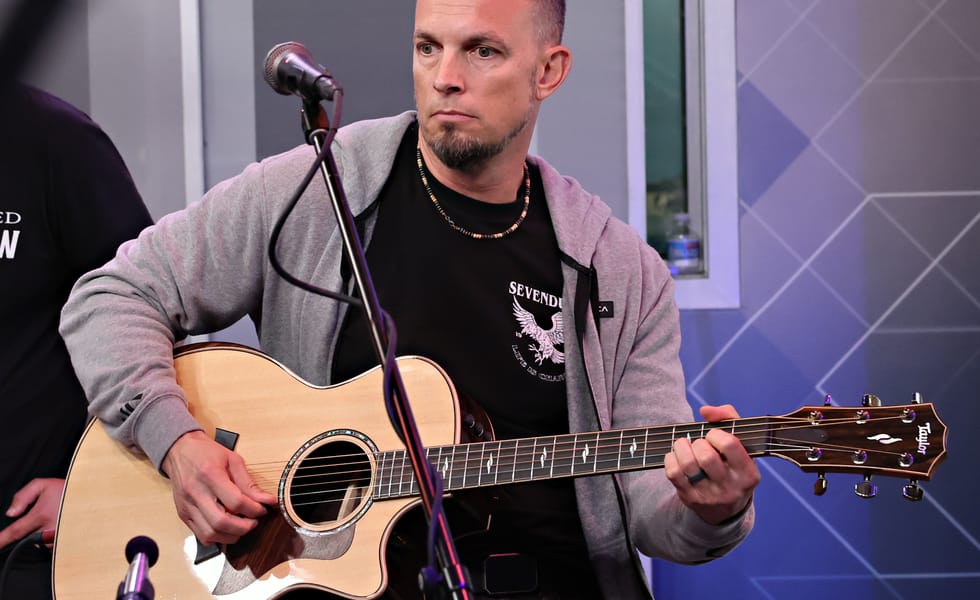
Creed guitarist Mark Tremonti believes the band’s younger audience began in the passenger seats of their parents’ cars.
Speaking with Philadelphia radio show Preston & Steve, Tremonti compared the pattern with his own relationship to Journey. He inherited those songs from his parents, then eventually saw the band for himself. Creed is now meeting listeners who learned ‘Higher’ and ‘My Sacrifice’ the same way.
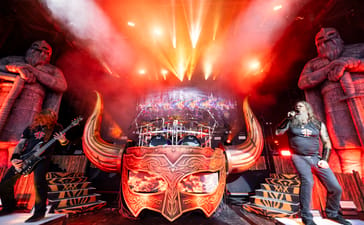
The group returned to touring in July 2024 after 12 years away. By then, its songs had travelled well beyond the late-1990s rock-radio context that made them hits. Sports crowds, memes and short-form video gave the catalogue new routes into public life, but the concerts showed that recognition had become more than an internet joke.
Tremonti’s explanation is less complicated. “Music is the closest thing we have to magic,” he said in the interview transcribed by Blabbermouth.
The word fits what reunion statistics cannot quite capture. A song can sit still for two decades while the audience around it changes completely. Parents pass it down without ceremony. Children hear it before they know the band’s history, then arrive at the reunion with their own attachment.
That process has also complicated Creed’s old reputation. The band was an enormous commercial success, then became an easy shorthand for a particular kind of turn-of-the-century seriousness. The current shows contain both histories at once: people returning to the songs they defended, and younger fans encountering them without the original cultural baggage. Tremonti’s point is not that context disappears. It is that songs sometimes outlive the arguments that once fixed them in place. A teenager hearing Creed through a parent can meet the chorus before the punchline, the communal lift before the critical consensus. That does not rewrite the band’s history; it widens it. The reunion has become a rare place where irony, affection and inheritance can occupy the same room, then fall away for the length of a song everybody already knows.