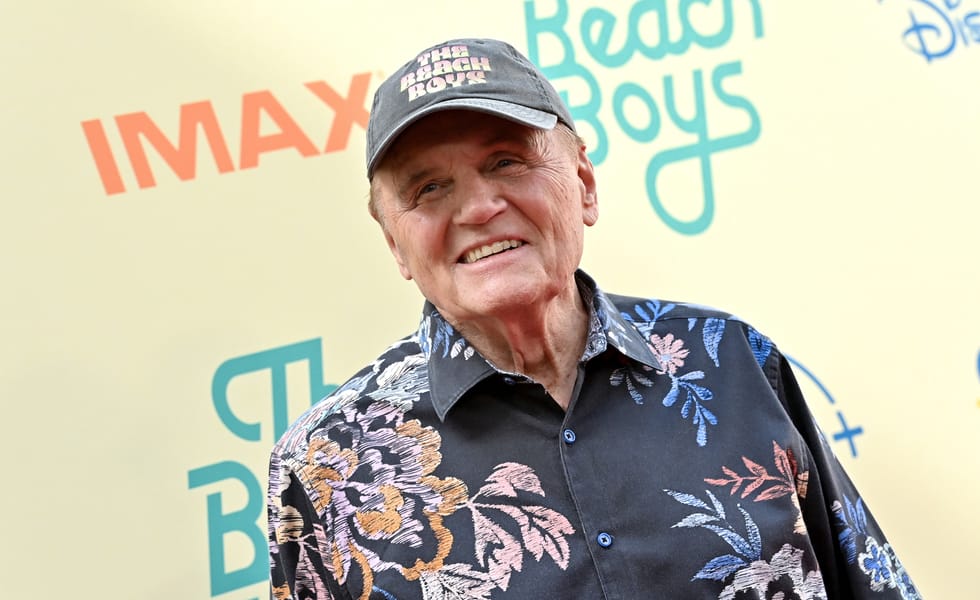
The Beach Boys co-founder helped create recordings that inspired the New York punk pioneers, eventually covering ‘Rockaway Beach’ and sharing a stage with Marky Ramone.
Mike Love, founding member of the Beach Boys and co-writer of some of rock music’s most enduring songs, has died aged 85. Among the musicians who took inspiration from the Californian group’s harmonies and infectious melodies were four punks from Queens: the Ramones.
Love’s representative, Katie Altman, confirmed his death on November 28 in a statement provided to Rolling Stone AU/NZ, saying the musician passed away surrounded by family. No cause of death was disclosed.
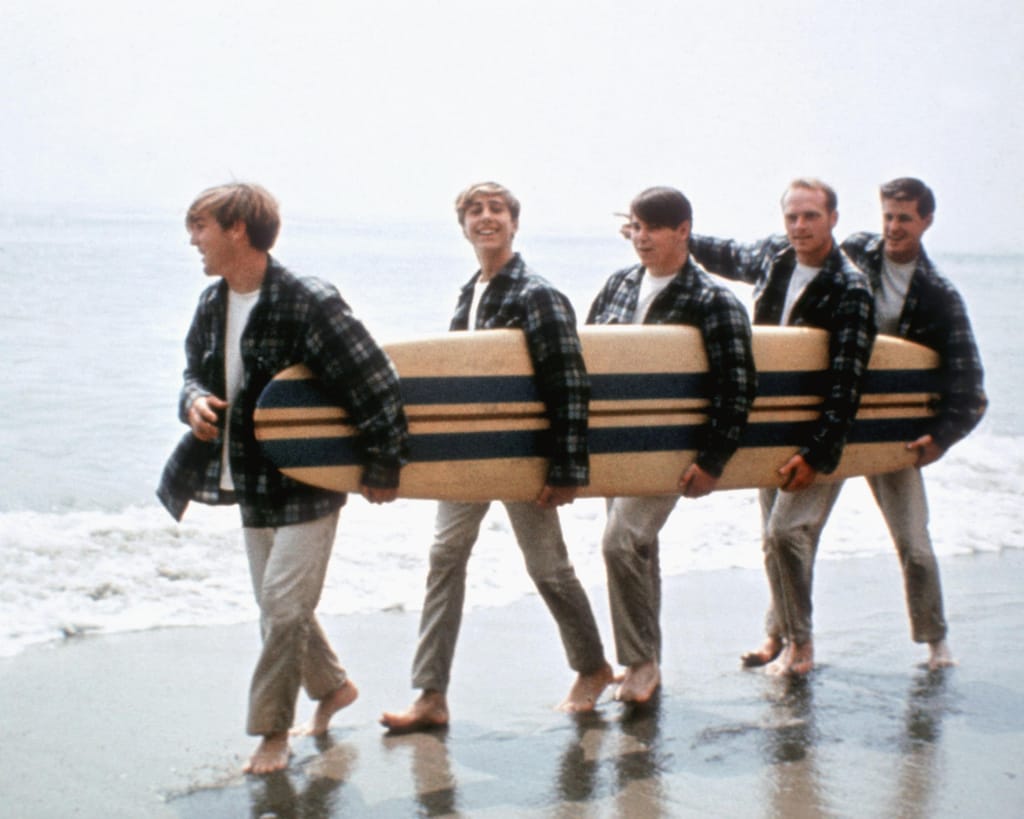
Love formed the Beach Boys in 1961 alongside his cousins Brian, Dennis and Carl Wilson and their friend Al Jardine. His distinctive vocals helped anchor the group’s intricate harmonies, while his songwriting partnership with Brian produced hits including ‘I Get Around’, ‘California Girls’ and ‘Good Vibrations’.
Those records would eventually find their way into a very different corner of American music.
From The Beach Boys To The Ramones And Back Again
In May 2019, Love released a cover of the Ramones’ ‘Rockaway Beach’, more than four decades after the New York punk pioneers recorded the song for Rocket to Russia.
That same month, Marky Ramone joined the Beach Boys onstage at The Paramount in Huntington, New York. As Relix reported at the time, the drummer played on their final three songs: ‘California Sun’, ‘Rockaway Beach’ and ‘Fun, Fun, Fun’.
The musical connection between the two bands went back decades.
Speaking to music journalist Tim Sommer for a 2019 interview archived on Love’s official website, longtime Ramones producer and collaborator Ed Stasium recalled how the Beach Boys directly informed some of the punk band’s best-known recordings.
During the recording of ‘Sheena Is a Punk Rocker’ in 1977, Johnny Ramone asked Stasium to emulate the guitar sound heard on the Beach Boys’ 1964 recording of ‘Little Honda’, a song co-written by Love and Brian Wilson.
In a separate 2017 interview with Louder, Stasium identified the Beach Boys’ arrangement of Bobby Freeman’s ‘Do You Wanna Dance?’ as an influence on the Ramones’ own version. Marky Ramone also identified the Beach Boys’ influence on the closing vocal hook of ‘I Wanna Be Sedated’ in the 2019 interview.
The fascination extended beyond the recording studio. Joey Ramone’s younger brother, musician Mickey Leigh, recalled their shared enthusiasm for the Beach Boys and their attempts to recreate the sounds of ‘Good Vibrations’ using a theremin.
When Love recorded ‘Rockaway Beach’ for his 2019 album 12 Sides of Summer, he asked musical director Scott Totten to bring more of the Beach Boys’ harmonies into the arrangement. Totten drew inspiration from Brian Wilson’s production of ‘Sloop John B’.
More than 40 years after the Ramones had drawn from the Beach Boys’ recordings, Love was returning the favour.
From Surf Rock To Shoegaze
The Beach Boys’ appeal to alternative musicians extended beyond American punk. Scottish noise-pop pioneers The Jesus and Mary Chain recorded a considerably noisier interpretation of ‘Surfin’ U.S.A.’, including it on their 1988 compilation Barbed Wire Kisses.
Yet one of the most intriguing connections to alternative music came from within the Beach Boys’ own catalogue.
Released on 1970’s Sunflower, ‘All I Wanna Do’ surrounds Love’s lead vocal with overlapping harmonies and hazy, atmospheric production. Co-written by Love and Brian Wilson, the recording was identified in a 2021 Guardian retrospective as anticipating shoegaze by approximately two decades.
It’s a recording worth revisiting in light of Love’s reputation as the Beach Boy most concerned with preserving the group’s commercially successful surf-pop sound.
Another example of his contribution to the band’s experimental work arrived four years earlier with ‘Good Vibrations’.
As detailed in the Beach Boys’ 60th-anniversary retrospective, Wilson assembled the recording from separately recorded sections, experimenting with instrumentation and recording techniques across multiple studios. Love supplied lyrics and vocal hooks that helped give the unconventional composition its pop immediacy.
In a 2016 interview with Rock Cellar Magazine, Love acknowledged the distinction between his songwriting contributions and Wilson’s accomplishments as an arranger and producer.
“I’m not saying I could have done it on my own,” he said.
A Complicated Creative Partnership
Love’s relationship with Wilson was frequently contentious. He faced longstanding criticism over his attitude towards Wilson’s more experimental work, particularly Pet Sounds and the unfinished Smile project. Love disputed accounts that portrayed him as hostile to his cousin’s artistic ambitions.
Their disagreements also extended to who received credit and royalties for the songs they had written together.
The dispute had its origins in the 1969 sale of the Beach Boys’ publishing catalogue. In December 1994, a federal jury ruled in Love’s favour, recognising his songwriting contributions to 35 compositions.
As the Los Angeles Times reported, a subsequent settlement saw Wilson agree to pay Love US$5 million and share future royalties on those songs.
Following Carl Wilson’s death in 1998, Love continued touring under the Beach Boys name. He reunited with Brian and Jardine for the group’s 50th-anniversary album and tour in 2012, although the reunion proved short-lived.
In June 2025, one day after Brian Wilson’s death was announced, Love was inducted into the Songwriters Hall of Fame.
Love continued performing into his eighties. Following a series of health-related tour cancellations this year, he made his final appearance with the Beach Boys at Nashville’s Ryman Auditorium on October 11.
His death leaves Jardine as the last surviving founding member of the Beach Boys. According to ABC News, Jardine toured Australia as recently as June this year, performing the group’s material with the Pet Sounds Band.
The disagreements between Love and Wilson will remain part of the Beach Boys’ history. But so will the songs they wrote together and the musicians who found new possibilities in them.
MORE IN News