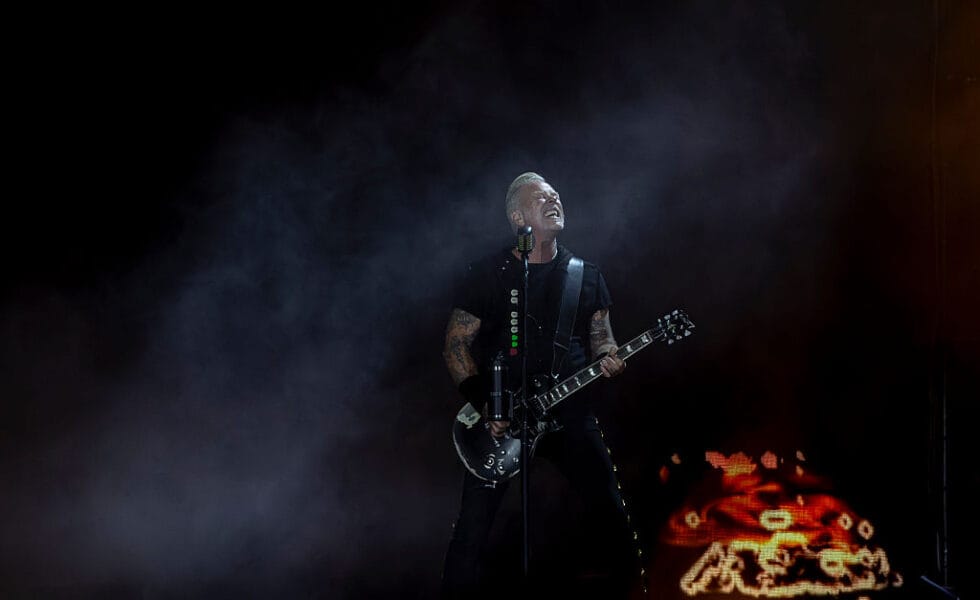
From the crowd, a stadium tour can look like organised chaos. Pyro goes off on cue, screens light up on time and a band walks onstage as though the whole thing simply appeared in the building that afternoon.
Behind that illusion is a moving operation with very little room for improvisation. Staging, audio, lighting, freight, local crews and dozens of people all have to arrive in the right order, often while the next show is already looming.
For bands operating at the scale of Metallica or Green Day, getting onstage is only the visible part. The harder trick is making an enormous production feel repeatable from city to city without letting the audience see how much work is happening underneath it.
The Spectacle Is Only the Visible Bit
When a major band rolls into a stadium, fans see the screens, lighting rigs and the sheer size of the show. What they do not see is the timetable underneath it: trucks being unloaded, departments working around each other and local crews slotting into a production that may have been built months earlier on another continent.
Metallica’s M72 setup shows how quickly the scale adds up. Its in-the-round stage changes sightlines, equipment positions and the way different parts of the production have to work inside a venue. The concept looks huge from the stands because, backstage, everything has to be unusually precise.
The people moving with the tour have their own deadlines too. On some international runs, especially where a schedule involves tight connections or long cross-border jumps, a private jet charter can be one of several transport options used for key personnel. That does not mean every major band uses one, or that it is standard practice. It is one way touring teams can build flexibility around a timetable when commercial connections do not line up.
Big Tours Have Bigger Problems
Rehearsals are not only about making sure the band knows the set. Large productions also need to work through what happens backstage and, just as importantly, what happens when something does not work as expected.
Once a tour is moving, there is rarely much spare time to solve a problem from scratch. A late departure can eat into setup time at the next venue. Equipment may be travelling on one schedule while crew and performers are moving on another. Each part can be separate for hours or days, then suddenly has to come back together at exactly the right moment.
Metallica’s No Repeat Weekend format complicates things further. Across the two shows in a city, the band plays different setlists, which means the pacing and musical shape of each night changes inside the same enormous touring framework. The physical production does not need to become a completely different show, but the audience experience does.
Green Day comes from a different place stylistically, but stadium scale creates a similar tension. Part of the band’s identity has always been speed, looseness and the feeling that things could tip over at any moment. At arena and stadium level, that energy has to sit on top of a production designed for tens of thousands of people.
At stadium scale, almost nothing behind the scenes can be left to chance.
Australia Changes the Equation
Moving between European or North American cities can already involve punishing turnarounds. Bringing a full-scale international production to Australia adds distance, time zones and a much bigger geographical jump.
People and equipment do not necessarily make that journey together. Freight can work to one timetable while crew, production leads and performers travel according to another. The trick is getting those separate schedules to meet again before doors open.
Australia also gives touring teams fewer nearby fallback options than a run through densely connected cities overseas. If something is delayed, replacing a piece of equipment, rerouting freight or moving people at short notice can become a bigger exercise simply because the distances are larger.
None of that should be obvious from the floor of the venue. When an international act reaches an Australian stadium, the expectation is that the show feels as complete as it did anywhere else on the tour.
Touring Rarely Goes Exactly to Plan
Even the most tightly organised run can be hit by weather, equipment faults, venue issues or travel delays. The useful skill is not pretending those problems will never happen. It is building a production that can absorb them.
Experienced touring crews tend to work from contingencies because they have seen versions of the same problems before. A change that would look dramatic from the outside can become another line on a production schedule if the people involved already know what can move, what cannot and which part of the show has to be protected.
When that planning works, the tour can look almost effortless from the crowd. The audience is not meant to think about freight windows, airport connections or load-in times. It is meant to feel like the band arrived, the lights went down and the whole machine suddenly came alive.
The Work Disappears by Show Time
By the time Metallica or Green Day walk onstage in Australia, nobody in the crowd needs to know where the production was two days earlier or how many separate schedules had to line up to get it there.
If the crowd notices the logistics, something has probably gone wrong. The more complicated the tour becomes, the more invisible that work needs to feel from the other side of the barrier.
A stadium show might look like mayhem. The people moving it around the world know better.
MORE IN Features