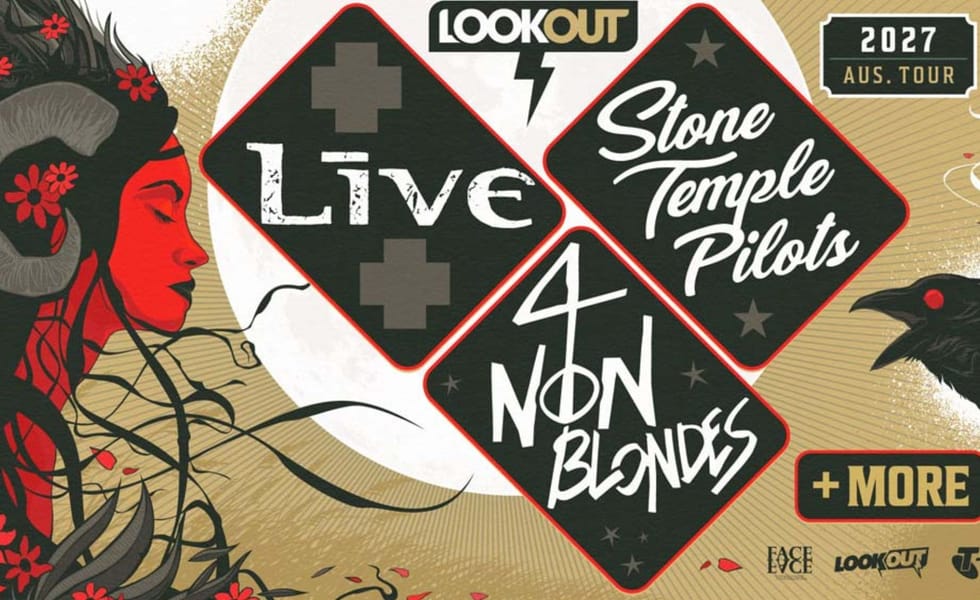
There is a very easy way to sell LOOKOUT 2027.
Call it nostalgia. Mention Throwing Copper. Put “Plush”, “What’s Up?” and “Dirty Jeans” somewhere near each other, remind everyone old enough to remember that CDs once lived permanently in car stereos. Job done.
It is also the least interesting thing about this lineup.
Because +LIVE+, Stone Temple Pilots, 4 Non Blondes and Magic Dirt aren’t really evidence that everyone suddenly wants to return to the ’90s; they are evidence of something better: alternative rock from that decade has spent 30 years refusing to remain safely in the past.
The songs survived. The bands, in different forms, survived. More importantly, the culture around them changed.
By the time LOOKOUT rolls through Australia next March, some people in those crowds will have owned these records when they were new. Others will have found them through streaming, memes, TikTok, parents, algorithms or younger bands dragging ’90s sounds back into circulation.
Same songs. Completely different relationship with them.
That is where LOOKOUT gets interesting.
Alternative Rock Was Never One Thing
Memory has a habit of cleaning up music history.
Decades get reduced to a few bands, a few clothes and one convenient sound. The ’90s become grunge. Grunge becomes Seattle. Alternative becomes a distortion pedal, flannel shirt and somebody staring unhappily at the floor.
The actual mainstream alternative explosion was much messier.
Stone Temple Pilots alone should have killed the idea that there was one approved version of the sound. Core arrived in 1992 with enough enormous riffs to make the grunge association inevitable, but STP spent the albums that followed wandering through psychedelia, glam, acoustic music and whatever else interested them.
Then put them beside +LIVE+.
Purple and Throwing Copper both turned 30 in 2024, leading the two bands to tour North America together celebrating the records. But listen to them side by side and the differences matter more than the shared release date.
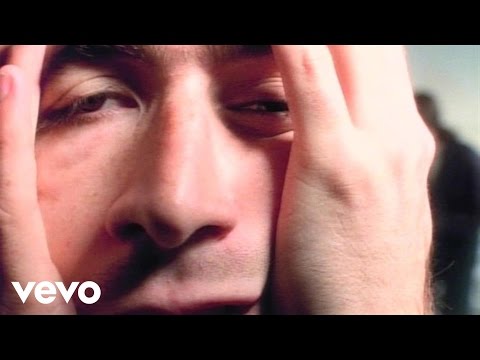
+LIVE+ could be crushingly sincere. Ed Kowalczyk sang like every chorus might contain the answer to a question nobody else realised had been asked. ‘Lightning Crashes’ was not cool in the detached sense of the word. Neither was ‘I Alone’; that was part of their power.
Live ‘I Alone’ video
Stone Temple Pilots had a different swagger entirely. Scott Weiland could turn menace into theatre, while Dean and Robert DeLeo kept dragging the band somewhere stranger than its original reputation suggested.
Then there were 4 Non Blondes: one studio album, one enormous global hit and a frontwoman who went on to become one of pop’s most successful songwriters and producers.
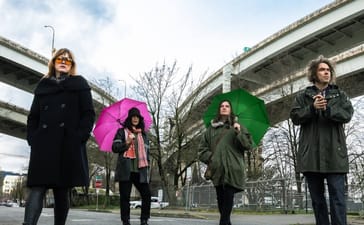
Magic Dirt were building another version of alternative culture out of Geelong.
Put all four on a poster today and they fit comfortably beneath “’90s alternative”. At the time, that term was broad enough to mean several very different things at once.
That breadth is worth remembering.
Alternative rock became culturally enormous not because millions of people suddenly agreed on one underground aesthetic, but because the walls separating underground music, punk, metal, college rock, weird pop and the mainstream briefly became extremely unreliable.
The alternative crowd got through. Some of them sold millions of records.
‘What’s Up?’ Escaped the ’90s Completely
If there is one song on the LOOKOUT bill that shows what happens when music outlives its original context, it is ‘What’s Up?’
The 4 Non Blondes hit has already lived several lives: radio staple, karaoke weapon, communal scream-along. Then the internet got hold of it again.
In 2025, the song entered another viral cycle through a TikTok mash-up with Nicki Minaj’s “Beez in the Trap”. The combination makes almost no historical sense, which is precisely why it makes perfect internet sense.
4 Non Blondes ‘What’s Up’ video

A song once inseparable from early-’90s MTV was suddenly raw material for people born years after 4 Non Blondes had broken up.
That is not traditional nostalgia. Nostalgia depends on remembering something.
Someone discovering “What’s Up?” through a ridiculous TikTok edit is not remembering 1993. They are using 1993 for their own purposes.
That difference matters. For years, the standard story about legacy rock acts has been that they survive by serving the people who were there the first time. Increasingly, that explanation feels incomplete. Old music now circulates without respecting the chronological order in which any of it happened.
A song from 1993 can collide with one from 2012 and become relevant again in 2025 without asking permission from either era.
And 4 Non Blondes themselves are not interested in remaining frozen.
After returning to live activity in 2025 following decades apart, the band are preparing 1994, their first new studio album since Bigger, Better, Faster, More!, for 2027.
Even the title seems to understand the joke.
Linda Perry has described the project as the record the band wanted to make three decades ago, informed by who its members have become since.
So when 4 Non Blondes walk onto an Australian stage at LOOKOUT, this is not quite an archaeological exercise. They will be a band from 1992, reunited in 2025, touring in 2027 while finishing a conversation interrupted more than 30 years earlier.
Try fitting that neatly onto a nostalgia playlist.
The ’90s Revival Has Moved Past Nostalgia
None of this is happening in isolation.
Younger alternative music has spent years pulling sounds out of the ’90s and making them useful again. Shoegaze has been rediscovered and mutated. Nu metal stopped being an embarrassing punchline and became source material. Oversized silhouettes came back. Guitars are once again being encouraged to sound catastrophically broken.
That does not mean Gen Z has collectively decided it wishes it had attended Woodstock ’94.
It means culture is increasingly bad at staying dead.
Streaming flattened the historical hierarchy. Social media finished the job. The old process, discover the current band, trace its influences backwards, slowly learn the canon, is no longer compulsory.
Now someone can hear 15 seconds of a 30-year-old song before they know the artist’s name.
Sometimes that produces shallow nostalgia bait; sometimes it produces genuine rediscovery. Usually it produces something less orderly than either.
That disorder suits alternative music surprisingly well.
Magic Dirt Make the Australian Part Matter
Magic Dirt’s place on LOOKOUT matters because Australian alternative music did not simply receive the ’90s revolution from overseas; we had our own version.
The Geelong band emerged in the early ’90s from a local world where noise, punk and indie rock were already colliding. Their presence means LOOKOUT does not have to pretend Australia merely watched American alternative culture happen on television.
Magic Dirt ‘Locket’ video

Magic Dirt lived the Australian version of it.
They also complicate the nostalgia narrative in another useful way. There is a difference between a band being remembered because an old single still tests well and a band maintaining an actual relationship with the community around it.
Magic Dirt remain an active live proposition rather than a historical reconstruction.
That matters on a tour whose marketing inevitably trades on memory.
The strongest version of LOOKOUT is not a wax museum; it is a meeting point.
Maybe We Remember the ’90s Wrong
LOOKOUT itself is making no secret of the nostalgia component. Fair enough. Nobody is buying a ticket to +LIVE+ hoping they skip “Lightning Crashes”.
But reducing this bill to nostalgia undersells why these artists can still command Australian arenas and outdoor stages more than 30 years after their defining records.
The interesting legacy of ’90s alternative rock is not that everything from the period aged perfectly. Plenty of it absolutely did not.
It is that mainstream rock briefly became broad and strange enough to accommodate artists who did not sound particularly alike, then convinced us afterwards that they all belonged to one coherent movement.
+LIVE+ could be grandiose and earnest.
Stone Temple Pilots could be filthy, psychedelic and glamorous.
4 Non Blondes could turn one gigantic song into something that eventually escaped the band itself.
Magic Dirt could make Geelong noise travel nationally without sanding away what made it interesting.
In 2027, those differences are the point.
The audience will not experience LOOKOUT the way an audience would have experienced these artists in 1994. It cannot. Scott Weiland has sadly passed, music culture has changed, the industry has changed and the crowd has changed.
The latter is a good thing. The most boring possible fate for alternative rock would be preservation.
Instead, the songs escaped. They were misremembered, rediscovered, mashed up, handed down and occasionally made weird again.
LOOKOUT 2027 is selling the ’90s. What it may actually prove is that nobody owns a decade once the next generation gets hold of it.
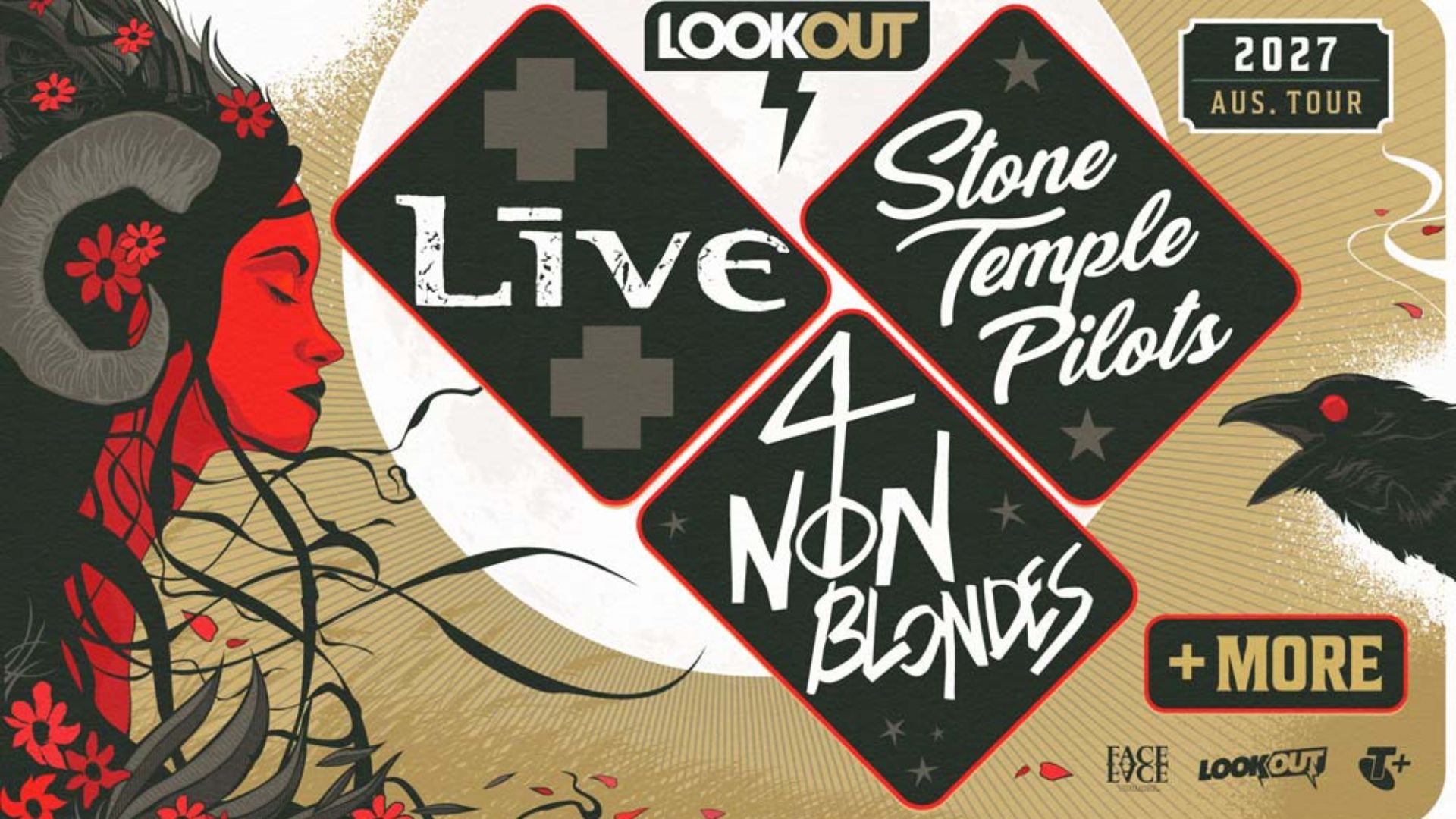
LOOKOUT 2027 Australian Tour Dates
- Saturday, March 6th – Adelaide, Adelaide Entertainment Centre
- Sunday, March 7th – Bendigo, Bendigo Racecourse
- Wednesday, March 10th – Canberra, AIS Arena
- Thursday, March 11th – Melbourne, Rod Laver Arena
- Saturday, March 13th – Mornington, Mornington Racecourse
- Wednesday, March 17th – Wollongong, WIN Entertainment Centre
- Thursday, March 18th – Sydney, Afterpay Arena
- Saturday, March 20th – Hunter Valley, Roche Estate
- Sunday, March 21st – Broadbeach, Kurrawa Park
- Wednesday, March 24th – Brisbane, Brisbane Entertainment Centre
Find out more and pick up your tickets here.
MORE IN Features