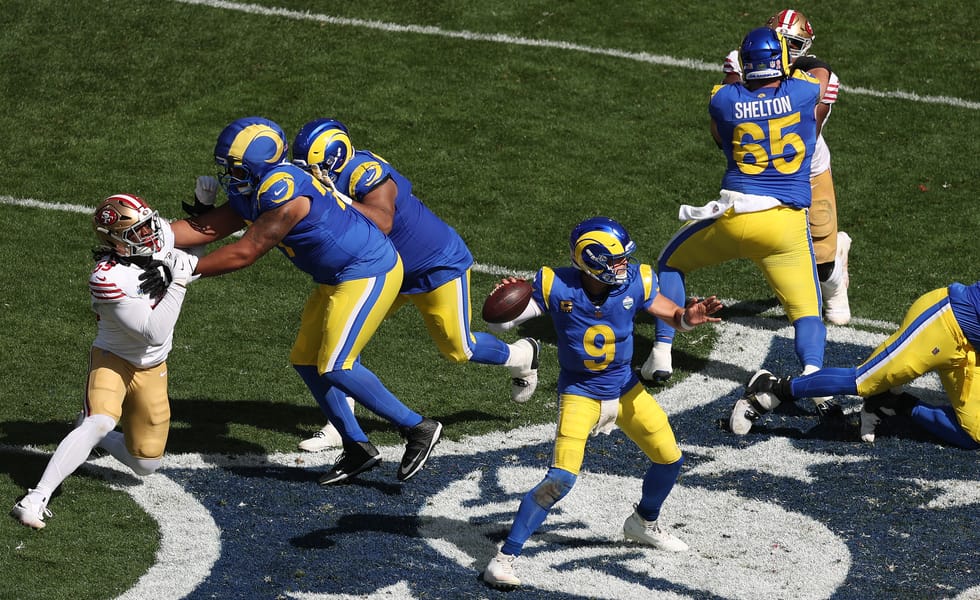
At 10:35 on a Friday morning, the Melbourne Cricket Ground looked less like an unlikely home for American football and more like a venue the NFL had been waiting to use.
A crowd of 100,021 packed the MCG on September 11 to watch the San Francisco 49ers beat the Los Angeles Rams 27-7 in Australia’s first NFL regular-season game. The result was fairly one-sided. The size of the crowd was the bigger story.
The NFL arrived in Melbourne with a simple question hanging over the trip: would Australia treat a regular-season game as a genuine sporting event rather than an overseas novelty? One game cannot answer everything, but more than 100,000 people through the gates is a strong place to start.
A Crowd That Answered the First Question
The MCG is used to big occasions, which made it an unusually good test for the NFL. There was no need to manufacture a sense of scale. The stadium was effectively full, the surrounding precinct carried the usual buzz of a major Melbourne event, and the league backed the game with fan activations and a wider kickoff festival around the city.
The official attendance made it the seventh-most attended regular-season game in NFL history. That is a remarkable number for a sport Australians usually watch from the other side of the world, often at awkward hours and without the weekly local presence enjoyed by the AFL, NRL or cricket.
Getting people to watch on television is one thing. Getting 100,021 people into the MCG shortly after breakfast is another. Melbourne did both the NFL and itself a favour by making the game feel like an event worth leaving the house for.
Melbourne Already Knows the Event Formula
There is a reason this worked in Melbourne. The city has spent decades getting comfortable with sports that become huge for a weekend or a fortnight without taking over the rest of the calendar.
Formula 1 does not have to displace local motorsport. The Australian Open does not need tennis to dominate the city all year. Melbourne knows how to turn a visiting competition into a temporary obsession, then move on to the next thing.
The NFL leaned into that pattern. The match came with merchandise, entertainment, fan zones and hospitality, while the Jonas Brothers handled the halftime show. It did not feel like an attempt to recreate a normal Sunday in California. It felt like Melbourne putting another oversized sporting event through its own machinery.
That may be the more realistic path for the NFL here. It does not need to compete with Australia’s established codes every week. It needs enough people to care when the league arrives, and enough interest to keep following it when the teams go home.
What Travels With the NFL, and What Doesn’t
American NFL coverage also carries a huge commercial layer around it, from fantasy competitions and streaming packages to regulated betting. DraftKings’ sportsbook is one familiar part of that North American ecosystem. But that is a market-specific piece of the sport, not something that simply arrives in Australia with the teams. Operator availability and wagering rules here are different.
That distinction matters because the Melbourne experiment was never really about importing every part of the American NFL experience. The things that travelled cleanly were the game, the rivalry, the spectacle and the fan culture around them.
The Morning Kickoff Was Part of the Deal
There was something slightly strange about staging an NFL game at 10:35 in the morning, but the timing explained a lot about what international expansion now looks like.
The Melbourne crowd got a live event in local time. American viewers got a Thursday night game in prime time. The NFL was serving two audiences at once, separated by the Pacific but watching the same season opener.
The television numbers suggest the compromise worked. The game averaged 18.5 million viewers in the United States on Netflix and reached 21.7 million viewers globally. The NFL also said it was the most-watched NFL game ever in Australia.
For a league trying to turn isolated overseas fixtures into a genuinely international product, that is probably more useful than pretending every market should experience the sport in exactly the same way.
The Harder Test Starts After the First Game
The first Australian NFL game had one advantage any future game will lose: nobody here had seen one before.
Curiosity can fill a stadium once. The harder question is what happens after the novelty wears off. Do people keep watching? Do local fan communities grow? Does another game still feel significant when it is no longer the first?
Those are questions the NFL can answer later. For now, it has something more useful than projections. It has seen 100,021 people walk through the gates. It has seen a record Australian television audience for the league. And it has seen the MCG absorb American football without the occasion feeling completely detached from Melbourne’s existing sports culture.
That does not mean the NFL is about to challenge the AFL or NRL for local dominance, and there is no reason it has to. A more plausible future is one where Australians follow the league from afar for most of the season, then turn it into a major event whenever it comes to town.
Before September 11, that was mostly a theory. Melbourne has now given the NFL 100,021 reasons to keep exploring it.
MORE IN Features