The former Black Flag frontman’s plans for a permanent museum proved too expensive. His alternative brought thousands through the doors of a Nashville gallery.
Henry Rollins spent years trying to find a permanent home for his punk archive. Last weekend, he opened part of it to the public for just two days, and more than 4,000 people came through the doors.
The former Black Flag frontman confirmed the turnout in a 10 November account of Cool Evidence: Captured Moments From the Last Century, held at Nashville’s RADAR615 gallery on 6 and 7 November.
The free exhibition featured photographs, posters and other artefacts collected over decades, including material associated with Black Flag, The Damned, The Cramps, Iggy Pop and The Stooges.
It was also the first public outing for a project that Rollins had originally imagined on a considerably larger scale.
From Permanent Museum to Two-Day Exhibition
Rollins moved to Nashville in 2021 with plans to establish a permanent museum and workspace for his collection.
In an extensive October interview with Nashville Scene, he explained that he bought a building in the city’s Chestnut Hill neighbourhood the following year, intending to house both his archive and business operations.
The costs proved prohibitive. Rollins sold the building in 2025, then investigated leasing another space before abandoning the idea of maintaining a permanent venue.
“I wanted a museum. I wanted my piece of the rock,” he told the publication.
Temporary exhibitions offered a more practical alternative, allowing him to take selections from the archive to galleries without the expense of running a dedicated building.
That approach led him to RADAR615 and its director, Lain York, who helped bring Cool Evidence together.
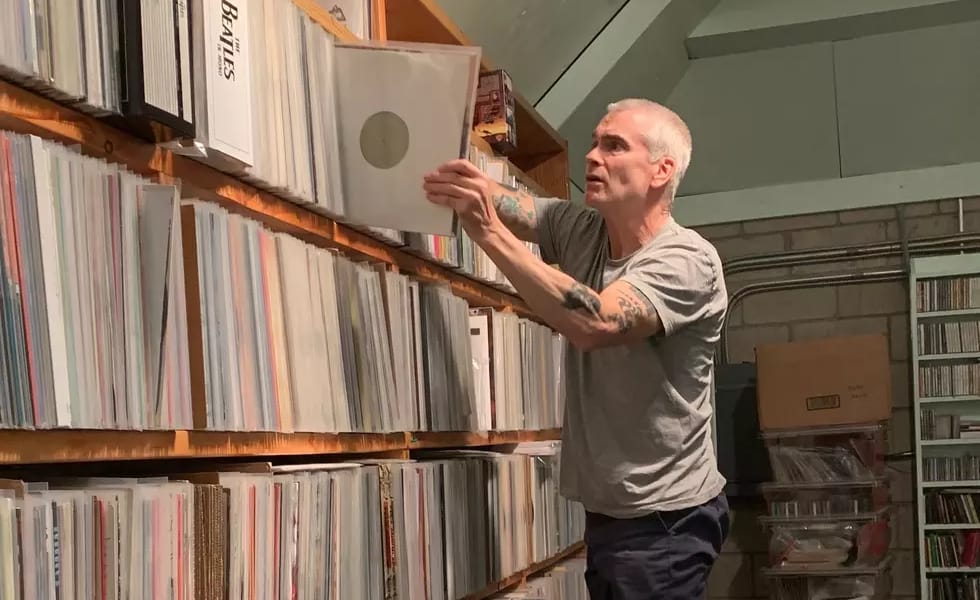
The exhibition offered only a small portion of what Rollins has collected. As he explained to Nashville Scene, the archive extends well beyond material from his own career, encompassing musicians, photographers and artists whose work documented underground music across several decades.
Among the pieces displayed were artefacts from Washington, DC’s early punk scene, alongside photographs, posters and artwork associated with some of the genre’s defining acts.
For Rollins, the physical objects matter precisely because they survive beyond the memories and accounts of the people who were there.
Months of Preparation, Six Hours to Pack It Away
In his account of the exhibition, Rollins described spending months deciding which pieces to show and working out how they would fit inside the gallery.
He had the layout so thoroughly planned that he could picture the space with his eyes closed. Even so, the gallery ran out of wall space with four items left undisplayed.
The exhibition closed on Saturday evening. At 9am the following morning, Rollins returned with York and two collaborators to take everything down.
They removed the framed pieces, wrapped them, loaded them into a truck and returned them to storage. It took approximately six hours.
For a collection assembled over decades, its first public appearance was remarkably brief.
Rollins nevertheless described the experience as one of the most rewarding projects he had undertaken.
“I’ve done quite a few things, but this was one of the best,” he wrote.
What pleased him most was that the exhibition wasn’t principally about his own work. He had not created the photographs or artwork on display. His role had been to find them, preserve them and eventually give other people an opportunity to see them.
What Comes After Cool Evidence?
Before the Nashville opening, Rollins discussed the possibility of taking future exhibitions to other American cities and, eventually, international destinations including London, Paris, Berlin and Tokyo.
Those plans remain aspirations rather than confirmed bookings.
His latest account offers no dates or locations for another exhibition, although he expressed hope that the four pieces left out of Nashville might eventually get their turn.
For now, the collection is back in storage, much as it was before the doors opened at RADAR615.
The difference is that Rollins now has a completed exhibition behind him, experience of what it takes to stage one and a reported audience of more than 4,000 people. Whether Cool Evidence travels further is still an open question.
MORE IN News