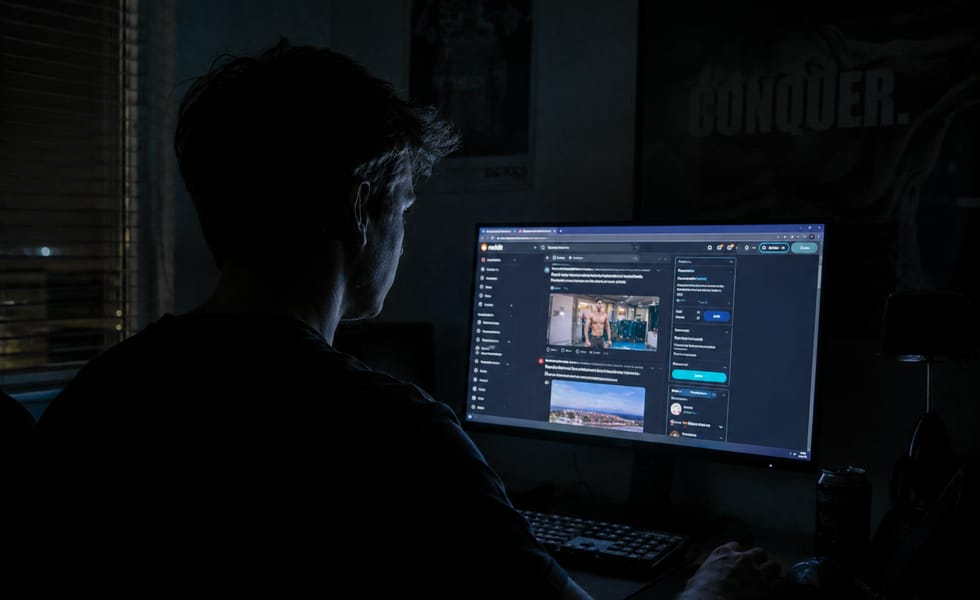
The internet once felt endless. A teenager could move through fan forums, MP3 blogs, strange Flash games, recipe boards and local message threads without encountering the same tone twice.
Now the feed bends back on itself. TikTok repeats a joke until it sounds tired. Google supplies an answer before a website loads. Instagram turns hobbies into neat visual styles, then circulates those same styles through advertising and recommendation systems.
Culture has always moved quickly. What has changed is how efficiently platforms sort attention into lanes, label those lanes and reward posts that look familiar enough to keep people moving.
The Feed Became the Front Page
Feeds used to be one place inside the web. For millions of people, they are now the web.
An app opens, the ranking system registers the first half-second of attention, and another clip arrives before boredom has time to form. Small signals accumulate: a pause, a replay, a skipped caption, a comment written in frustration at 1:12 in the morning.
Creators learn the house style. A cooking account uses the same opening line as a political commentator. A historian cuts a 90-second story with the pacing of a makeup tutorial. The system does not need to suppress unusual ideas to make culture feel smaller. It only needs to make predictable formats more visible and more commercially useful than strange ones.
The result is a web where discovery feels busy but narrow. There is always a new clip, yet the rhythm, camera angle and emotional temperature often feel borrowed. A feed may appear personal while millions of people receive the same edits, punchlines, fears and product cues within the same afternoon.
Then the cycle starts again.
Search Answers Before Curiosity Can Wander
Search once sent people outward. A question about sourdough starter might lead to a baker’s forum, a university extension page and a ten-year-old blog with bad photographs but sharp advice buried in the comments.
Today, snippets, answer boxes and automated summaries increasingly keep the visitor on the search page. Quick answers are convenient, but they also flatten the places those answers came from.
This changes who gets remembered. When a search page extracts the same few sentences and places them above the original source, the voice behind the information begins to disappear. Smaller publishers lose the peculiar details that made them worth visiting: the failed experiment, the regional slang, the footnote nobody else copied.
The same compression appears across commercial search results. A name such as Spinboss can arrive already surrounded by category labels, summaries and assumptions before a reader reaches the underlying page. The search interface does not merely locate information. It helps determine how that information will be understood.
Culture becomes easier to scan and harder to trace. A person receives an answer but not the room where that answer was argued over. That missing room matters because disagreement leaves texture.
Without texture, the web starts to sound like a help desk.
Microcultures Still Exist, but They Copy Each Other Faster
Subcultures have never remained pure for long. Punk borrowed. Hip-hop sampled. Tumblr fandoms remixed screenshots until the original context became optional.
The difference now is speed and measurement.
A joke begins in a Discord server on Monday, reaches X by Wednesday, becomes a TikTok sound by Friday and appears in a brand post before the weekend is over.
That movement is not always theft. Sometimes it is affection, translation or play. Still, platforms tend to reward the version that travels cleanly rather than the version that carries its history.
Inside jokes lose their password quality. A phrase once used by a few thousand people becomes a sticker, then a shirt, then a line in a social media calendar. The group that created it may move on, but the simplified version continues circulating.
This is why online culture can feel crowded and empty at the same time. Everyone has seen the meme, yet fewer people know why it was funny in the first place. Context gets thinned.
Taste Turns Into a Template
Recommendation systems do not simply reflect taste. They train it.
A bedroom becomes a set because the camera responds well to one lamp, one plant and one shelf of colour-coded books. A musician hears that a song should reach its hook before the listener swipes away. A commentator learns that careful uncertainty performs worse than clean outrage.
The pressure is strongest where money meets attention. Influencers test thumbnails like advertising campaigns. Podcasters cut their own conversations into 28-second confrontations. Shops name products using phrases already circulating through search bars.
Eventually, culture begins to arrive pre-shaped for ranking.
People still make strange art, private jokes and sprawling essays. The easiest public route, however, favours work that already knows its category. The web starts to resemble a shopping centre with rotating signs: bright, organised and oddly difficult to get lost in.
Getting lost still matters.
A Larger Web Starts With Messier Habits
The answer is not nostalgia. Old forums contained gatekeepers, spam, ugly arguments and terrible search functions.
A wider internet requires habits that resist automatic sorting. People can type full addresses again. They can bookmark independent publications, subscribe to small newsletters, use RSS readers and follow artists outside the largest platforms. Libraries, personal websites and old message boards still exist.
Platforms will continue ranking material because ranking holds attention. Users do not have to mistake every ranking for a map of reality.
A feed shows what survived a machine’s test. It does not show the whole culture.
The more useful question is simple: who is missing here?
A music fan who asks it may find a local radio archive. A parent may find a quiet disability forum. A student may discover a scanned zine with five spelling mistakes and one perfect paragraph.
Try one search without selecting the first result. Look past the summary, the snippet and the most polished answer. The distance between what appears first and what remains hidden still says plenty.
Keep looking sideways.
MORE IN Culture