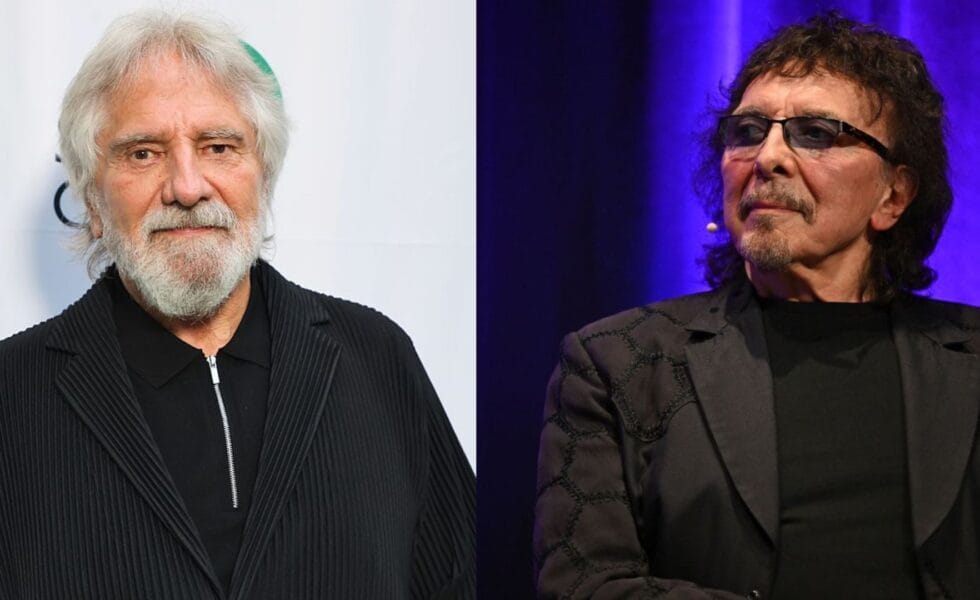
Black Sabbath may have taken their final bow in 2025, but Geezer Butler isn’t slowing down just yet.
The legendary bassist has revealed he’s been quietly working on a solo album and, in a twist that feels very 2026, artificial intelligence is playing a role, sort of.
Speaking at Steel City Con in Pennsylvania during a session hosted by Dee Snider, Butler reflected on life after Sabbath’s Back to the Beginning farewell show and offered an update on what both he and Tony Iommi are doing next.
According to Butler, Iommi is deep into his own solo record and doing things the old fashioned way:
“Tony’s got this great album that he’s doing right at the moment,” Butler said. “I think he’s in the process of mixing it right now, so it should be out sometime [soon].”
Iommi has brought in a human vocalist for the project, described by Butler as “this great singer from Sweden”, Butler was also asked to contribute bass, but geography may get in the way.
“He wanted me to do three bass tracks – but he wanted me to do them in England, and I can’t go to England until June. So if he can hang on that long, I might collaborate with him in June.”
Experimental route
Butler’s own album is taking a more experimental route, after digging through decades of unreleased material, he hit a familiar problem.
“I didn’t have a singer when I’m at home. But AI came along! … I’m using an AI singer to bring all the lyrics out.”
Before anyone starts sharpening pitchforks, Butler was quick to clarify that AI isn’t replacing musicians on the final record.
“I can take it to singers that I’m gonna be working with and go, ‘This is what I want on the album,’ so they’ve got a better idea.”
He explained that AI helps translate ideas more clearly than rough demos ever did.
“Before I was just playing them a bass riff or something, going, ‘Can you sing to this?’”
For Butler, the tech is a tool, not a shortcut.
“It’s so much better now – you can sit in your studio and do everything on AI and then take it to proper musicians and let them take over.”
Still, he knows not everyone will be on board, “It’s really helped me. A lot of people think it’s cheating.”
Whether fans agree or not, Butler’s approach feels less like replacing creativity and more like sharpening it before handing things over to real voices.
RELATED




MORE IN News