For a brief, deafening moment at the turn of the millennium, metal wasn’t just mainstream, it was dominant.
No album symbolised that takeover more than Limp Bizkit’s ‘Chocolate Starfish And The Hot Dog Flavored Water’.
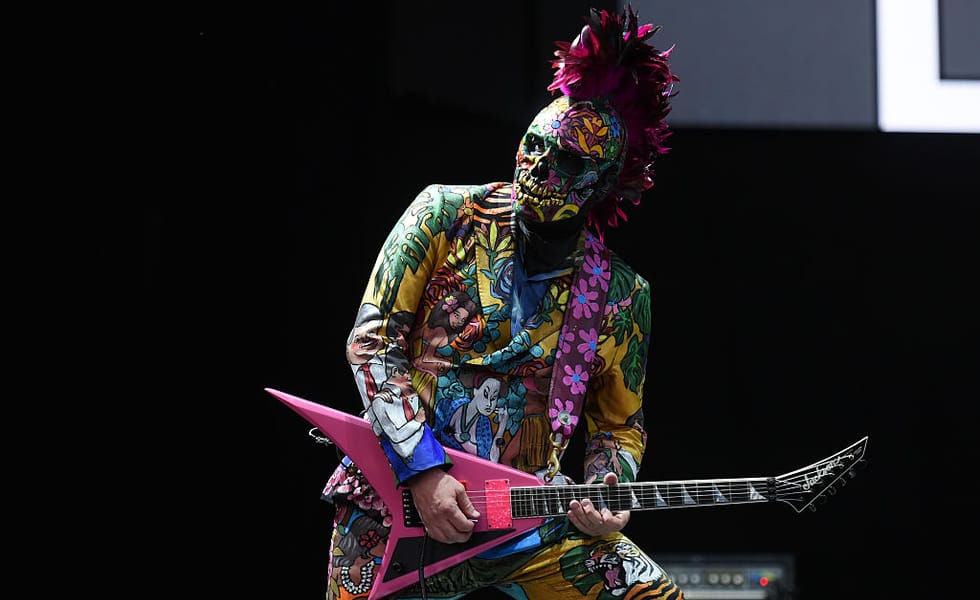
Wes Borland of the band caught up with Louder Sound and discussed the band’s third album (released October 17th, 2000), the album didn’t creep into the charts or build momentum slowly, it exploded.

Shifting over one million copies in its first week, it became the fastest selling rock album of all time and pushed Limp Bizkit from controversial nu-metal upstarts into unavoidable pop culture figures:
“I never thought Limp Bizkit was gonna be as large as it was,” guitarist Wes Borland recalls.
“Then the record sold a million in the first week. It was just ridiculous. There was a point in which things got so big that I don’t remember getting them getting bigger.”
By that stage, the groundwork had already been laid, ‘Significant Other’ had gone number one in the US, ‘Break Stuff’ and ‘Nookie’ were unavoidable, and the band’s chaotic Woodstock ’99 appearance had turned them into both scapegoats and household names. Chocolate Starfish… simply removed the ceiling.
The album landed stacked with era-defining tracks: ‘Rollin’’, ‘My Generation’, ‘Take A Look Around’, ‘My Way’, and ‘Hot Dog’ alone could fill a greatest hits set.

The Mission: Impossible 2 soundtrack placement, wrestling crossovers, and MTV saturation cemented Limp Bizkit’s place at the centre of the culture war around heavy music.
Success came at a cost
Borland describes how fame quickly became suffocating, “In the space of six years, I went from a nobody, no one knowing who I was and having complete anonymity, to having to move to Los Angeles because I had 20 kids on the doorstep of my house in Florida looking in my windows,” he says.
“I couldn’t go to the grocery store.”
Fred Durst later admitted he felt like “public enemy number one,” while Borland began questioning his place in a band that had become both adored and despised, by late 2001, the pressure cracked, and Borland walked away (before returning in 2004).
Limp Bizkit would never hit those commercial heights again, but they didn’t need to, Chocolate Starfish… remains a snapshot of when metal briefly ruled the world, loud, obnoxious, and completely unapologetic.
Follow me on Facebook here:
RELATED