Debt, desperation and the marketing gamble that may have brought down Australia’s most famous festival
For more than three decades, Bluesfest has been one of Australia’s most recognisable music festivals. Every Easter the Byron Bay event pulled tens of thousands of fans and some of the biggest artists in the world.
For 36 years, Bluesfest ran on something simple: trust.
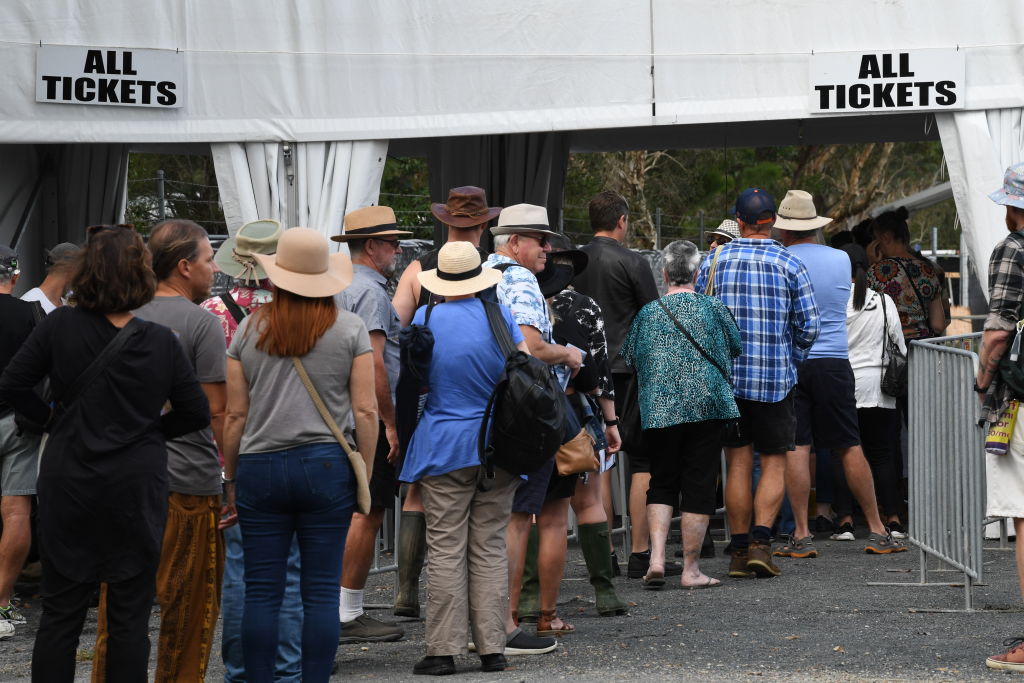
Fans trusted that if they booked the flights, paid for accommodation and lined up at the gates, the festival would happen. For many people Easter in Byron was never treated like a gamble. It was a tradition.
If you went to Bluesfest 2025 because you believed it was the last one, you were exactly who the campaign was built for.
And now, less than a year later, “last festival ever” has become true anyway. Just not in the sentimental, dignified way the press releases promised.
Bluesfest 2026 has been cancelled roughly three weeks out from bump in, and the company behind it has been placed into liquidation. Ticket holders have been told they are likely unsecured creditors. In plain English, many fans could be left with nothing while also wearing flights, accommodation, annual leave, campers, parking passes and everything else that goes with planning an Easter trip.
The question at the centre of it
If Bluesfest 2026 was not going to happen, why were tickets still being sold so close to the event?
That question now sits at the centre of the collapse of one of Australia’s most famous festivals.
This is the point where people often shrug and say festivals are tough. They are. Costs are up. Demand is softer. The market is brutal.
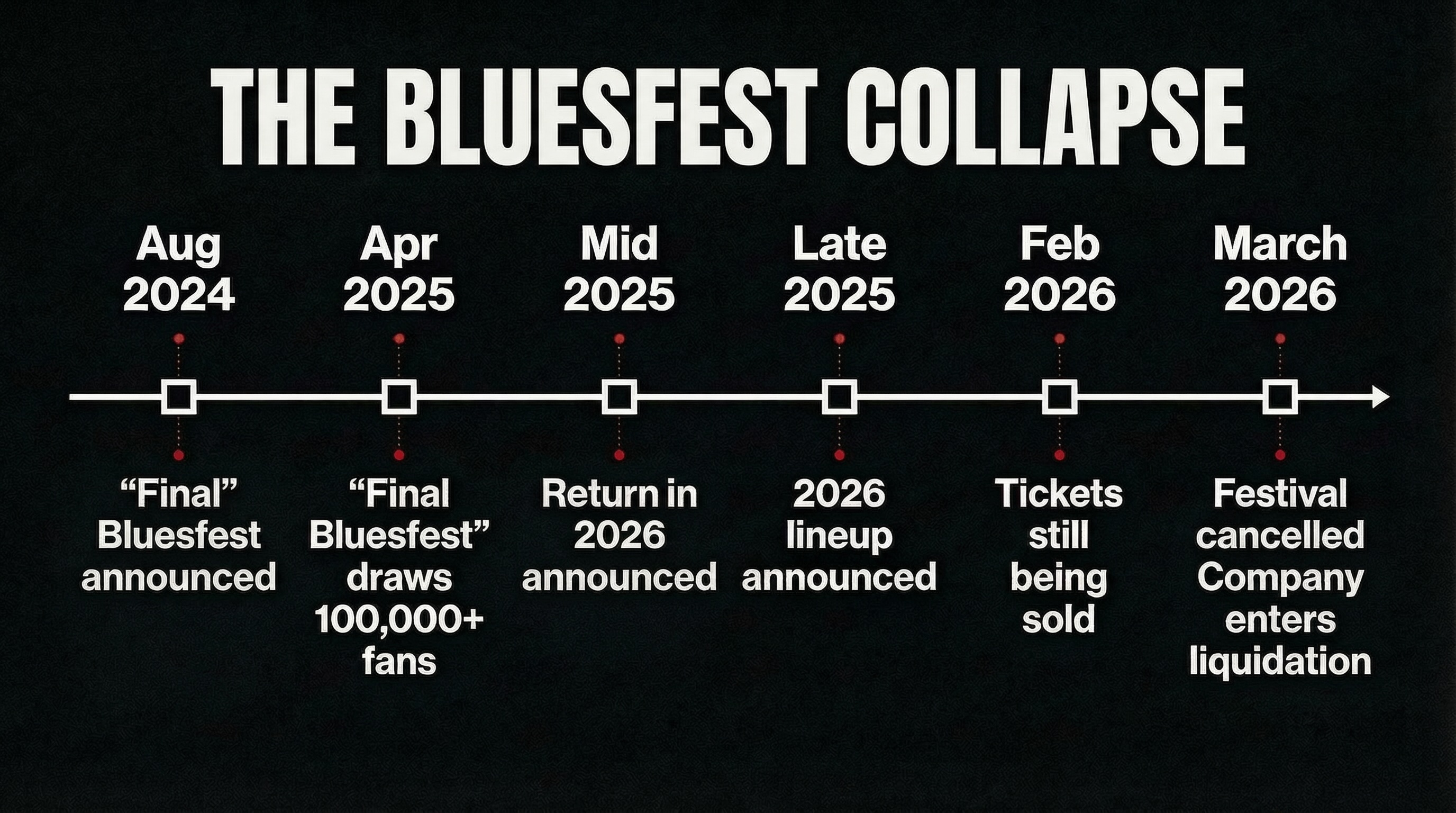
But Bluesfest is not just another festival story. Because this one contains a very specific moment that now looks like the turning point. The decision to publicly declare 2025 the final Bluesfest, then reverse that decision, then keep selling right up to the edge of collapse.
Sources who spoke with Blunt say the “last festival” message was not simply a farewell announcement. It was discussed internally as a ticket strategy. A line designed to push people to buy sooner rather than later.
The end that arrived late, and hit hardest
On Friday 13 March 2026, Bluesfest announced the 2026 festival would not proceed. Organisers cited rising production, logistics, insurance and touring costs, softer ticket demand and international uncertainties.
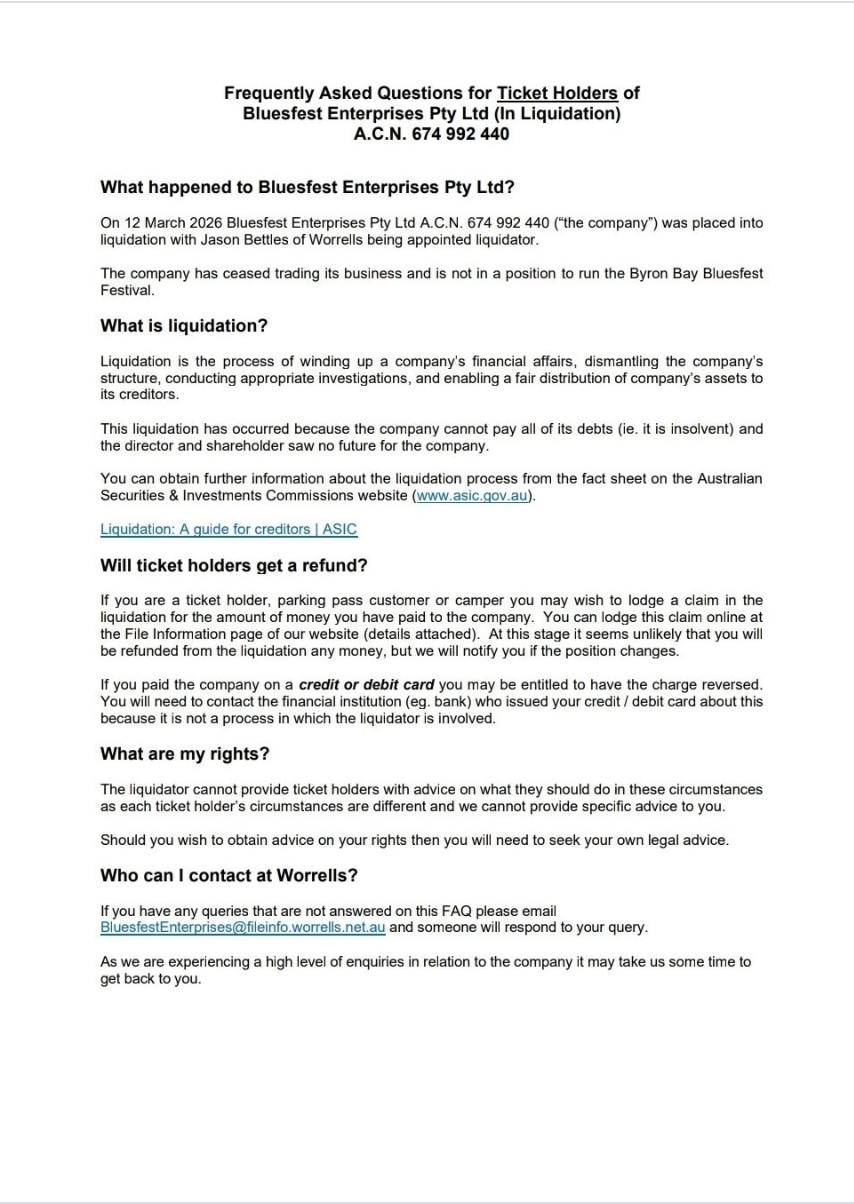
A liquidator was appointed to handle the company’s financial affairs, including vendor obligations and ticket holders.
At first ticket holders were told they would be contacted about potential refund arrangements. But the tone changed quickly once Worrells began contacting punters.
ABC reported that ticket holders were told it would be unlikely they would receive a refund because the company could not repay its debts.
That line turns a music festival into something colder. A creditor list.
Because once the company entered liquidation, ticket holders were no longer simply customers expecting refunds. They were reclassified as unsecured creditors in an insolvency process.
And the timing makes it worse.
By the time a festival is three weeks out, the machine is already moving. Artists are locked. Freight is booked. Production suppliers are committed. Staff are rostered. Local businesses are gearing up. Fans have already spent thousands before they even scan a wristband.
ABC spoke to ticket holders who said organisers must have known earlier and questioned why the cancellation came so late, after people had booked travel and accommodation and were still buying tickets.
The “last festival” promise that now reads differently
Wind the clock back to 2024.
Publicly, Peter Noble was warning that festivals were under pressure. Privately, people with direct knowledge of dealings around Bluesfest tell Blunt the business was already showing signs of financial strain.
One source describes a pattern familiar to anyone who has worked around stressed events. Payments delayed. Partners chasing invoices. Relationships beginning to fray.
Blunt has been told that at least one supplier relationship became a flashpoint, where an independent brewery that had also sponsored the event was left unpaid for product supplied.
The allegation described to us was not just that the bill remained unpaid, but that the response carried the tone of “get in line with everyone else”.
If accurate, it matters for one reason. Sponsors are not just logos on banners. They are part of the trust ecosystem that festivals depend on.
Burn the wrong partners and the future gets harder, not easier.
Then came the moment sources keep circling back to.
In the days leading up to the public announcement that 2025 would be the final festival, sources say there were conversations where the central question was simple. Would calling it the last Bluesfest sell more tickets?
Blunt understands the discussion did not stop at the farewell headline. It also included how the comeback would be framed if the strategy worked.
Sources say the plan was to present any reversal as a response to “overwhelming support”. Not as a change of mind or a misread of the situation, but as a reward for loyalty.
Then the press release landed.
“After the 2025 festival… it’s time to close this chapter… it will be our last… now is your last chance to experience our beloved festival.”
The message did exactly what it was meant to do.
It created urgency.
It gave people a reason to buy now rather than later.
Why “last time ever” works for artists but not for festivals
There is a reason farewell tours keep returning.
A beloved artist can announce a final tour and later decide they still have more in the tank. Fans might complain, but most understand the emotional logic.
A festival is different.
A festival is not a person. It is a business asking the public to take on risk.
When a festival says “this is the last one”, it is asking people to spend hundreds or thousands of dollars based on the idea of finality. Fans book flights, accommodation and leave from work around that promise.
If that finality becomes a marketing lever that is later reversed, the public does not feel gifted.
They feel played.
And once a festival damages that trust, it becomes harder to ask the public to buy early the next time.
The backflip, and the “overwhelming support” narrative
After Bluesfest 2025 drew a large crowd, the reversal followed.
Moshtix promoted the return with a post titled “Byron Bay, We’re Doing It Again, Bluesfest 2026 Is ON!”, crediting the decision to the overwhelming support shown by fans.
But not everyone took it that way.
ABC reported that some punters who attended what they believed was the final festival felt betrayed by the announcement of a comeback.
Then came the detail that reframed the farewell narrative.
In a Rolling Stone report, Noble referenced appearing at a federal parliamentary inquiry and acknowledged that the “last festival” messaging helped drive ticket sales.
The article quoted him saying audiences “sit on their money unless you find a way to make them spend it”, and reported that calling it the last Bluesfest helped get ticket sales “over the line”.
In other words, the idea that Bluesfest might be ending became part of the pitch.
That matters because it suggests the “last ever” message was not only a farewell.
It was also a sales trigger.
The 2026 build, and the warning signs people ignore
Through 2025 and into early 2026, Bluesfest continued promoting a return.
The lineup expanded. Major acts were added. Tickets were still being sold.
Then the collapse came. Late and financially brutal.
Reporting emerging after the liquidation suggests the scale of the financial damage is far larger than initially understood.
The Guardian reported that documentation being prepared for the Australian Securities and Investments Commission indicates Bluesfest Enterprises may owe more than $23 million to ticket holders alone.
The figure also reframes the earlier “final festival” campaign. After being urged to treat 2025 as the last Bluesfest, many fans went on to buy tickets for the 2026 return — and are now among the creditors of the company that collapsed.
Earlier reporting referenced liabilities linked to Stripe and PayPal payments of around $5.7 million, but the broader ticket exposure appears to be significantly higher once all ticket holders are counted.
At the same time, reports have indicated the company held only around $28,000 in bank accounts at the time of liquidation.
That gap explains why liquidators have already warned fans that refunds are unlikely.
The ticket money question
The Bluesfest ticket terms published online stated tickets were sold by Bluesfest Enterprises Pty Ltd on behalf of Bluesfest Byron Bay Pty Ltd.
Ticketing platforms can operate in different ways. Sometimes the platform holds ticket revenue before remitting it to organisers. In other cases the organiser processes payments through its own merchant facility and the ticketing platform simply acts as a storefront.
Moshtix’s terms state that some events use the organiser’s merchant facility and that Moshtix is not responsible for refunds in those cases.
Now look again at the creditor list showing large entries linked to Stripe and PayPal.
From the outside it appears payments may have been processed through those gateways rather than held by the ticketing platform itself.
Blunt cannot confirm the full flow of funds without access to the liquidator’s investigation.
But the public picture emerging is this: Ticket sales continuing right up to the edge. A liquidation with almost no cash left. Fans being told refunds are unlikely.
What happens next
AAP has reported it remains unclear whether international artists scheduled for Australian sideshows promoted through Bluesfest Tours will proceed.
Those shows may involve different entities and different ticketing structures, which could produce different outcomes for refunds.Meanwhile the NSW Government had reportedly committed a $500,000 grant to support the festival this year and is expected to attempt to recover those funds.
Which brings the story beyond fans and into public accountability.
The part nobody wants to say out loud
There is a human story here too.
A festival founder with a genuine legacy. An industry that has become far more expensive. A business model squeezed by rising costs and hesitant consumers.
But there is another story fans can feel as well.
A festival that built trust for decades.
A moment where that trust became leverage.
A comeback framed as overwhelming support.
And a late cancellation that left the public carrying the largest losses.
AAP summed up the irony bluntly in its reporting.
Peter Noble, it said, “may have been right after all”.
2025 might have just been the last Bluesfest, as Peter Noble warned us all back in 2024. It just became the last in the worst possible way.
RELATED

MORE IN News