When Bluesfest announced that Parkway Drive would appear on the lineup, something felt off.
Not controversial. Not exciting.
Just strange.
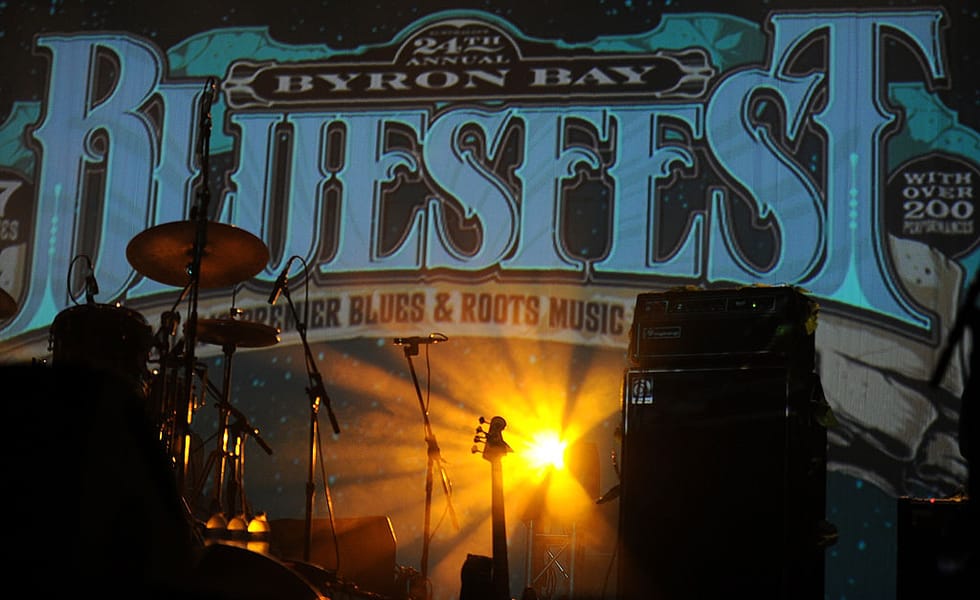
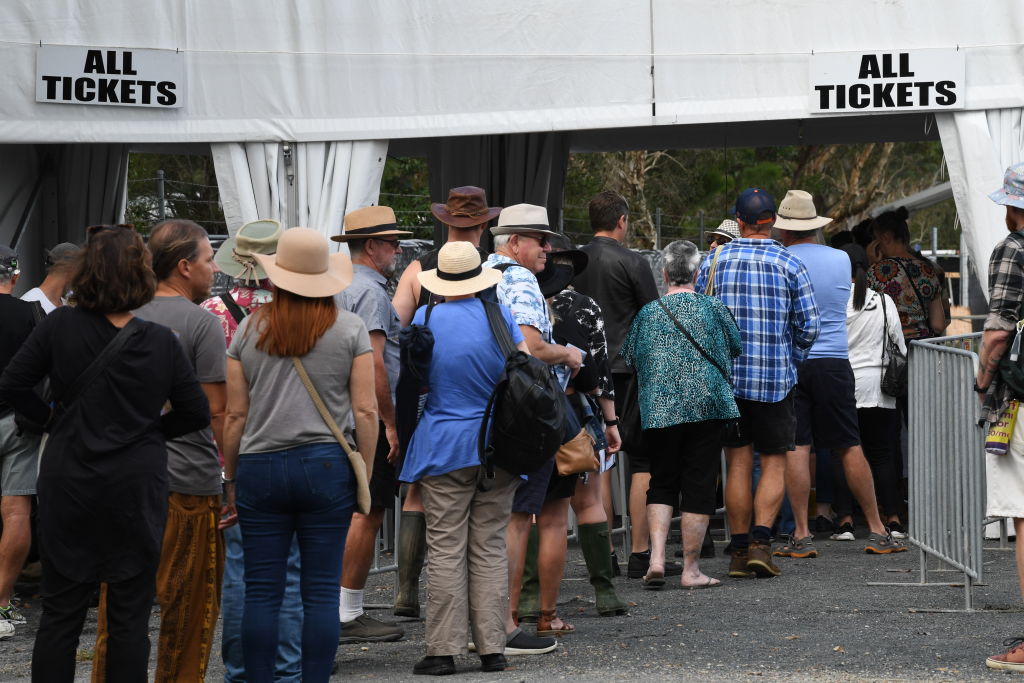
Parkway Drive are one of the biggest metal bands in the world. Their shows are explosions of fire, breakdowns and mosh pits. Bluesfest, for decades, had been something else entirely. A four day pilgrimage for blues, roots and heritage rock fans gathering under giant tents in Byron Bay.
The two worlds barely overlapped.
And that is what made the booking feel less like a bold reinvention and more like a flare shot into the sky.
Because when a festival that built its identity around blues suddenly reaches for metalcore to sell tickets, something deeper is usually happening behind the scenes.
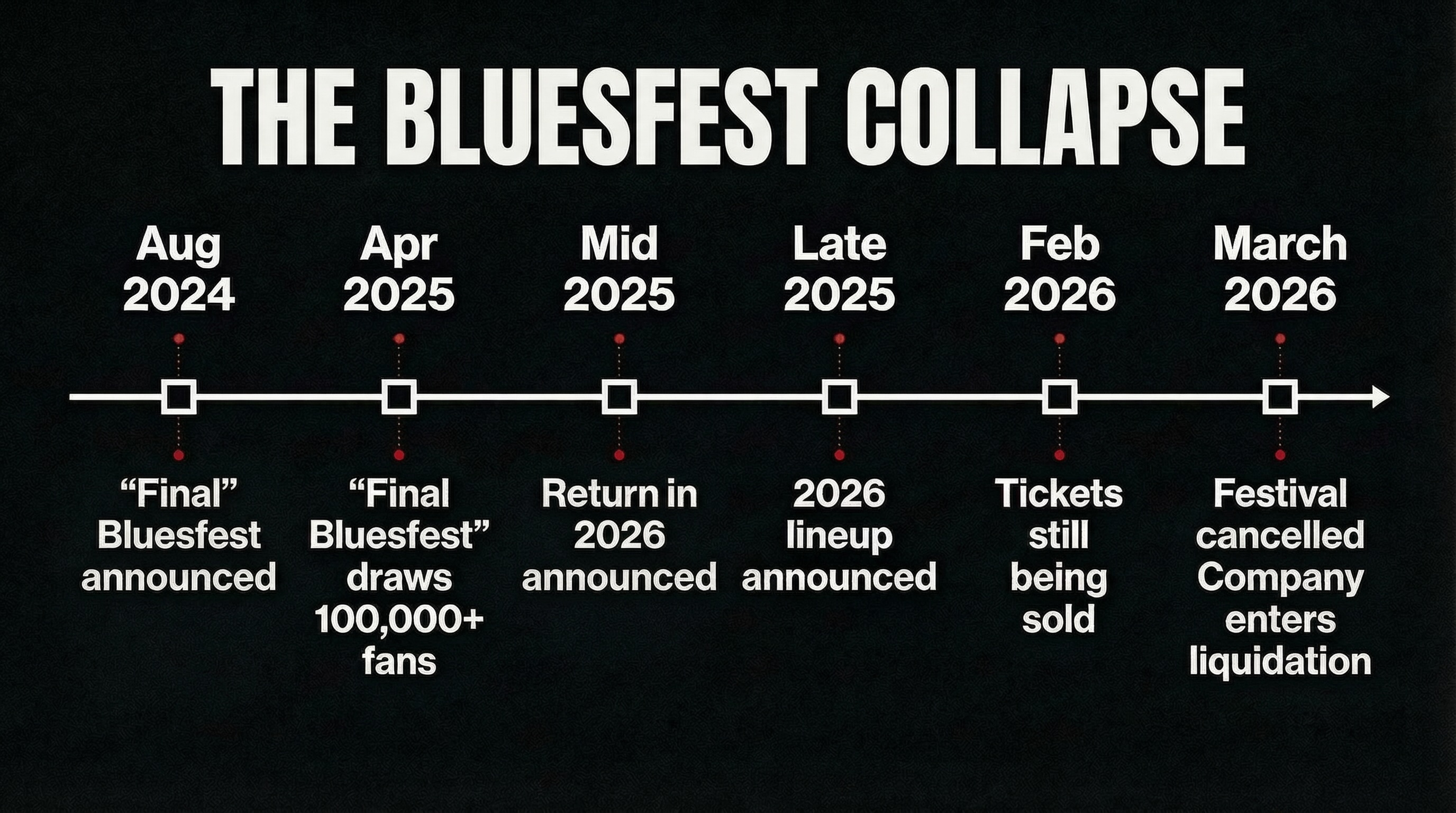
By the time that announcement arrived, the story of Bluesfest was already nearing its end.
A Festival That Became an Institution
For decades Bluesfest was one of the pillars of Australian music culture.
People planned their Easter around it. Families travelled across the country for it. Entire communities of fans returned year after year because the festival was not just a lineup. It was a ritual.
The music reflected that loyalty.
Blues. Roots. Heritage rock. Soul.
Artists whose audiences tended to grow older alongside them.
That loyalty was the festival’s greatest strength. Over time it also became its quietest problem.
Because culture does not stay still.
The Audience Moved On
By the late 2010s the generational shift was already visible.
The audience that built Bluesfest in the 1990s and early 2000s had aged into their fifties and sixties. Younger fans were forming their musical identities somewhere else. Hip hop festivals. Electronic events. Viral pop tours. Massive arena shows.
At the same time the economics of festivals were changing.
Artists increasingly preferred their own headline tours.
Production costs kept rising.
Ticket prices pushed closer to the ceiling of what audiences would pay.
Then COVID hit and left much of the festival industry carrying serious financial damage from cancelled events and refunded tickets.
Bluesfest survived longer than most.
But survival is not the same thing as evolution.
The Founder’s Dilemma
When someone spends decades building something, the line between the event and the person who built it starts to blur.
The festival becomes legacy.
Reputation.
Identity.
And when the time comes to step away, that can create a quiet crisis. Does the institution change, or does the founder hold onto the version that made it successful in the first place?
Bluesfest increasingly looked trapped in that moment.
The same format continued.
The same scale.
The same risks.
Even as the industry around it changed.
The Late Pivot
Which brings us back to Parkway Drive.
Booking them did not look like a carefully planned cultural pivot.
It looked like urgency.
A sudden attempt to pull in a younger audience for a festival whose core demographic had been aging for years.
But cultural reinvention rarely works like that.
Festivals that successfully evolve do it slowly. They reshape their identity over time and bring their audience along with them.
When the pivot arrives overnight, it usually means something else.
It means the clock has already run out.
The Damage Behind the Collapse
When festivals fail, the damage does not stop with the promoter.
Behind every event are hundreds of people whose livelihoods depend on it.
Bands who have already paid for travel, rehearsals and equipment.
Crew members who rely on festival season for months of work.
Stall holders who invested their savings into food stock, merchandise and infrastructure.
Families who spent their holiday savings on tickets, accommodation and travel.
Somewhere right now there is a food stall operator who spent weeks preparing stock and equipment for Bluesfest, calculating that the four day event would carry their business through the winter.
Somewhere else there is a band that paid for flights and backline months ago expecting the festival cheque to cover the trip.
And somewhere there is a family who saved for months to make the Byron pilgrimage together, only to watch the event disappear before they even unpacked the tent.
For many of those people the collapse of a festival does not mean disappointment.
It means debt.
One person’s identity crisis becomes someone else’s real crisis.
The Brand That Did Not Need to Die
That is the real tragedy of Bluesfest.
It was not a weak brand.
It was one of the most powerful festival names in Australia.
With that kind of cultural equity, the future could have looked very different.
Smaller boutique Bluesfest weekends around the country.
Curated heritage lineups touring theatres.
Partnerships with younger promoters who understood new audiences.
The founder stepping back into the role of curator while the format itself evolved.
Instead the original structure stayed largely intact until the very end.
The same scale.
The same risks.
The same belief that the festival could continue operating the way it always had.
Reading the Signal
Looking back now, the Parkway Drive announcement feels less like a strange lineup choice and more like the moment the internal reality briefly surfaced.
A desperate pivot.
A festival trying to reinvent itself too late.
A founder confronting the end of the thing he built and unable to imagine it becoming something else.
By the time Parkway Drive appeared on the lineup, the story of Bluesfest had already been written.
RELATED


MORE IN News