Amyl and the Sniffers has spent years touring America, selling tickets there and promoting itself directly to US fans.
But in trying to get Jamie Nelson’s copyright counterclaims against the band’s company thrown out of a US court, its lawyers described the American share of its social following as a “very small percentage”.
The figure they gave was 16 per cent. US District Judge George H. Wu looked at the follower totals and wasn’t convinced that was small.
In a tentative ruling filed on September 9, Wu says he would reject Amyl and the Sniffers Pty Ltd’s argument that the court lacks authority to hear the claims against it. That decision is still preliminary, with a hearing scheduled for September 14.
The band company argued that it is based in Melbourne, has no US office, employees, bank accounts or property, and described its American touring as “sporadic”. Its argument about a “very small percentage” concerned the proportion of followers based in the US, rather than how much it valued those fans.
Using the 206,000 Facebook followers and 776,000 Instagram followers in the evidence, Wu calculated the US total at 157,120.
“16% of that figure, 157,120, is hardly a diminutive sum.”
That calculation adds Facebook and Instagram followers together. It does not establish 157,120 separate people, since someone following both accounts would count twice.
The court also looked at years of US tour promotion, ticket sales and merchandise.
One Amyl Instagram post opened with “‘MERICA”, while another told followers: “NORTH AMERICA, WE’RE SO EXCITED TO TOUR YOU AGAIN”. Neither needed much translating.
Ticket links, a USA option in the online shop, American distribution arrangements and a Los Angeles-based booking agency were also before the court.
In Wu’s preliminary view, the company’s US contacts were planned, regular and spread across dozens of cities, rather than “random, isolated, or fortuitous”. He applied a federal rule that allows the court to look at contacts across the United States, rather than California alone.
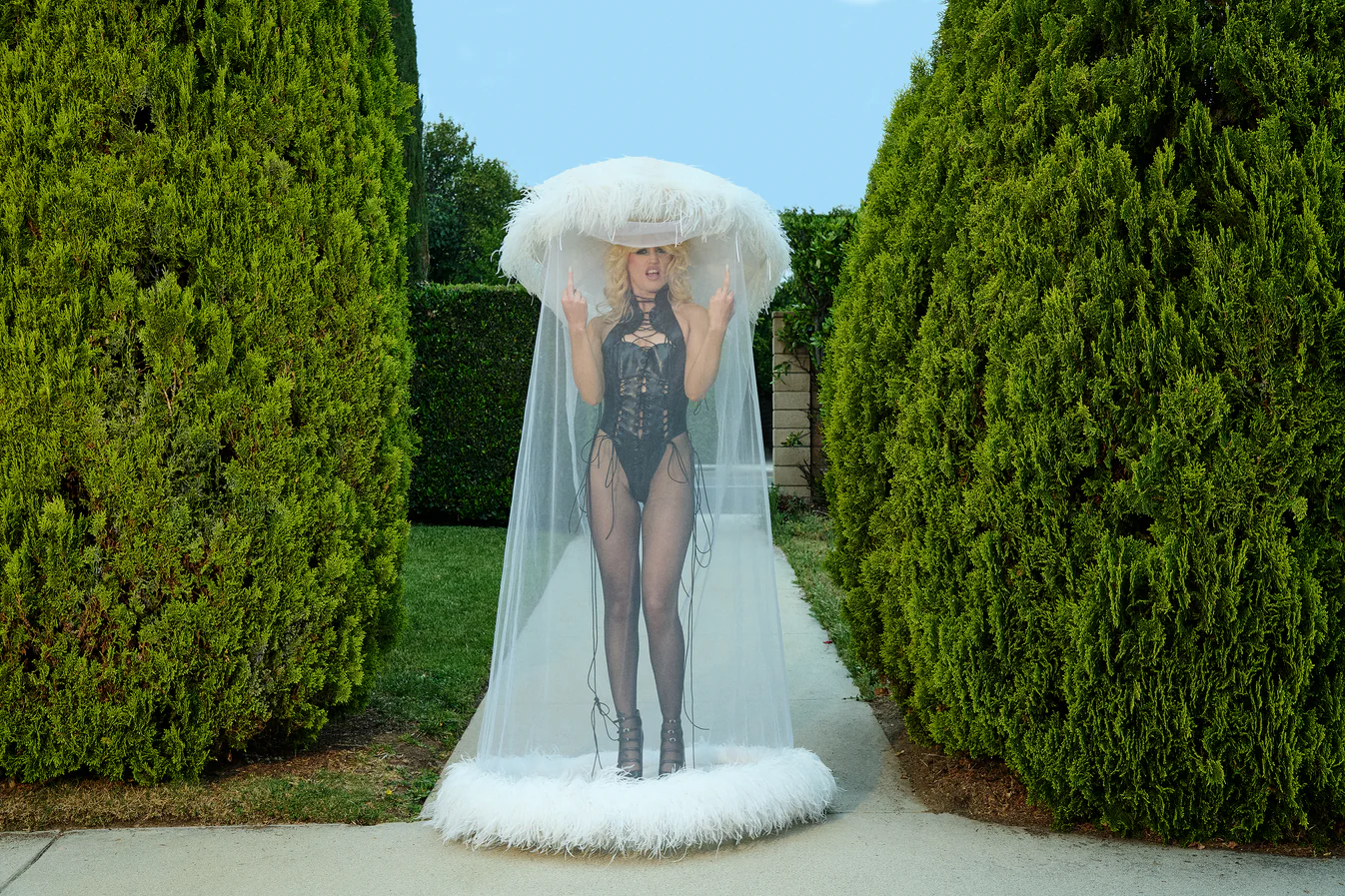
Taylor sued Nelson in California in December 2025, alleging that Nelson had displayed and sold photographs using her name, image and likeness without permission. Wu pointed out that Taylor and the band company are represented by the same lawyers.
If Taylor’s claims go ahead, he noted, band members or representatives may already need to travel to California for evidence gathering or trial. That formed part of his reasoning for keeping the band company in the US case.
Nelson spent months trying to formally serve Amyl and the Sniffers, according to her account, before investigators handed the papers to Taylor during the band’s US tour. The service was for the band company. Taylor was already a party to the case.
Nelson and her company would have to rewrite their copyright infringement counterclaim.
Taylor has asked the judge to dismiss those allegations. In a separate September 9 tentative ruling, Wu says the counterclaim does not give enough detail about an act of infringement within the United States.
US copyright law generally does not cover infringement happening entirely overseas. Wu would dismiss the claim without prejudice, allowing Nelson and her company to amend it and try again.
Their lawyers argued that Taylor uploaded and distributed the photographs to Meta’s servers in California. But that detail appeared in the lawyers’ later arguments, not in the counterclaim itself. Wu says he cannot consider those additional facts when deciding whether the current counterclaim is sufficient, although they could be included in a revised version.
He found enough detail in the allegations about copyright ownership and unauthorised copying. That only gets those parts of the claim past an initial check. It does not establish that Taylor infringed anyone’s copyright.
Nelson and her company also want a declaration from the court setting out their rights to display, reproduce, distribute and sell the photographs. That request would stay in the case, but the judge has not decided what rights they ultimately have.
Taylor separately argued that Australia would be a more appropriate place to hear Nelson’s counterclaims. Wu’s tentative decision rejects that argument.
He noted that much of the evidence concerns online activity, the shoot took place in Los Angeles and Nelson operates in California. Taylor also chose the California court for her own claims, so many of the same witnesses could already be needed there.
Taylor’s federal false-association claim would be dismissed without another chance to amend it.
Nelson and her company, now represented by copyright lawyers Doniger/Burroughs, have asked the court to dismiss Taylor’s Second Amended Complaint. Under Wu’s proposed ruling, they would succeed on the Lanham Act claim, but her other claims would continue.
The Lanham Act claim alleges that Nelson’s use of Taylor’s identity falsely suggested she endorsed or was associated with Nelson’s products and photography services. Wu says he would dismiss it with prejudice, meaning Taylor would not get another opportunity to rewrite that claim in this case.
The court had already raised serious problems with Taylor’s federal claim earlier in the case, then allowed her to amend the complaint. Her latest version includes more allegations and comments from fans who apparently believed the prints were a collaboration with Taylor.
Wu says the additions did not “move the needle” and concludes that Taylor “cannot survive the Rogers test”. That test protects expressive works against this type of claim unless the use has no artistic relevance or explicitly misleads people about the work’s source or content. The fans’ apparent confusion did not, in his view, establish that Nelson had explicitly misled them.
Taylor’s two California publicity-rights claims would still go ahead. They concern whether Nelson commercially used Taylor’s identity without permission. Those claims do not require the same showing of explicitly misleading endorsement.
Her implied-contract claim would also continue. Taylor alleges that the parties agreed to limit the shoot and use of her identity to an editorial purpose connected to Vogue Portugal, and that Nelson went beyond that agreement. Wu says she has set out enough detail for that claim to proceed. Whether there was such an agreement, and whether Nelson broke it, still has to be decided.
Wu is “somewhat skeptical” of part of the contract claim where it overlaps with Nelson reproducing and displaying her own copyrighted photographs. For now, though, he is not prepared to dismiss it.
The three motions are scheduled to be heard on September 14.
These are the judge’s proposed decisions ahead of that hearing. They do not settle the dispute or establish who ultimately wins.
If Wu adopts them unchanged, the band company would stay under the US court’s jurisdiction. Taylor would lose her federal false-association claim but keep her publicity and contract claims. Nelson and her company would get another attempt at their infringement counterclaim, while their request for a declaration of their rights would continue.
Blunt previously reported on competing claims about who had won earlier hearings. Meanwhile, court-ordered mediation has already failed.
The September 14 hearing is set for 8:30am in Los Angeles. Wu can still change these tentative decisions after hearing the parties’ arguments.