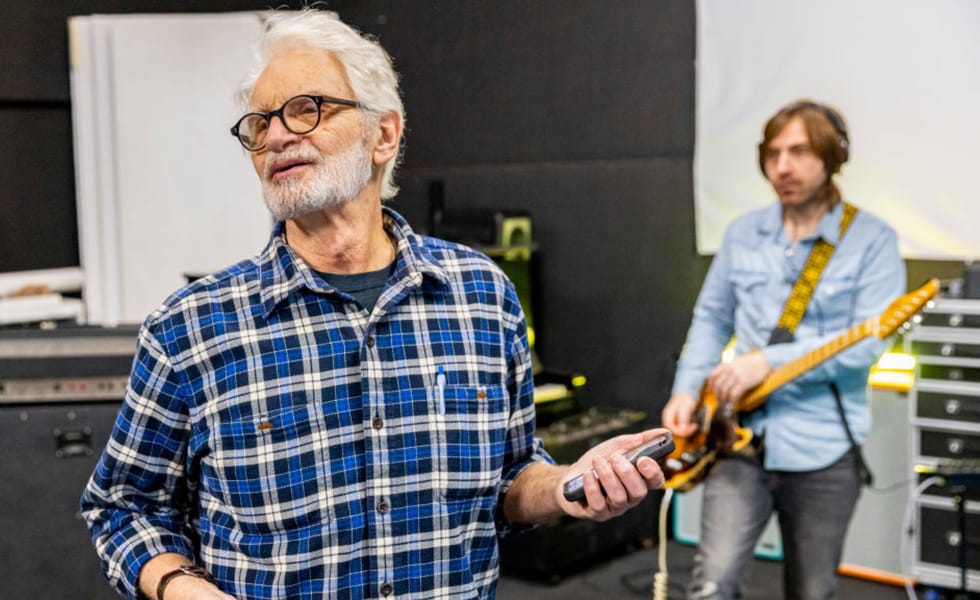
Some producers shape records, Jack Douglas shaped entire eras.
The legendary producer and engineer, whose fingerprints are all over classic releases from Aerosmith, John Lennon, Cheap Trick, Patti Smith and New York Dolls, has died at the age of 80, news of his passing was confirmed by his family through a statement shared to his Facebook page.
“Jack passed away peacefully on Monday night. As many of you who follow him know, he produced great music and lived a colorful life… He will be missed.”
For rock fans, Douglas’ legacy is practically welded into the DNA of the ’70s, his work helped define the grime, swagger and explosive studio energy that pushed hard rock from clubs into stadiums.
Born in the Bronx in 1945, Douglas started out as a folk singer before moving behind the studio desk after graduating from New York’s Institute of Audio Research, he worked his way up at the legendary Record Plant studios, initially as a janitor before becoming an engineer on sessions involving artists like Alice Cooper, Miles Davis and James Gang.
That climb eventually placed him in the orbit of John Lennon, first engineering tracks tied to The Who’s abandoned Lifehouse project before working on Lennon’s iconic 1971 album Imagine. Years later, Lennon brought Douglas back to co-produce Double Fantasy, the former Beatle’s final studio album released shortly before his death.
Douglas’s deepest connection arguably came through Aerosmith
After hearing the band’s 1973 debut, Douglas recognised something dangerous simmering beneath the surface, he would go on to produce or co-produce the band’s defining run of albums including Get Your Wings, Toys In The Attic, Rocks and Draw The Line.
“I listened to that first record over and over, and I thought, ‘These guys know how to write tunes,’” Douglas recalled in a 2025 interview (per Ultimate Classic Rock).
He also pushed Joe Perry and Brad Whitford to evolve beyond straightforward American blues rock players, helping shape the sharper guitar attack that became central to Aerosmith’s classic sound.
Douglas never really stopped working either, later producing records for Slash’s Snakepit and returning for Aerosmith’s modern-era albums throughout the 2000s.
His name may not have always sat front and centre on the posters, but generations of rock records simply wouldn’t sound the same without him.
Follow me for more on music:
MORE IN News