Streaming changed music discovery, but it also forced festivals to become more culturally distinct, selective, and experience-driven to survive.
There’s a theory doing the rounds that streaming is slowly strangling live music. The argument goes: why pay hundreds for a festival ticket when you can hear the same artists from your couch?
It sounds logical on paper. But it also misses what’s actually happening.
Australia’s live music scene isn’t collapsing evenly. The divide is sharper than that. Big, well-curated events continue drawing strong crowds while a growing number of mid-tier festivals quietly disappear underneath rising costs, tighter margins, and audiences that have become far more selective about where they spend money. Recent discussions around government support for struggling events, including Victoria’s new festival grant initiatives, reflect how financially strained parts of the sector have become.
Streaming didn’t create that pressure on its own. But it absolutely accelerated it.
When audiences can access almost any artist instantly, weak lineups become harder to justify. Generic programming gets exposed quickly. Fans no longer buy tickets simply because an event exists. They buy because the experience feels distinct enough to leave the house for.
That shift has changed the economics of live music completely.
Promoters now compete less on access and more on atmosphere, exclusivity, and identity. The festivals surviving aren’t necessarily the biggest ones. They’re the ones that feel culturally specific and emotionally worth attending.
Australian promoters have responded by leaning harder into scarcity. Major sets are often lightly streamed or not streamed at all. Surprise appearances, exclusive collaborations, and tightly curated lineups have become part of the value proposition. The live performance itself is increasingly treated as the premium product.
That logic exists across digital media generally. Audiences now expect polished, frictionless experiences almost everywhere they spend attention online, whether they’re consuming music, sport, gaming content, or broader entertainment coverage through platforms discussing trends like payid casinos explained by Gambling Insider.
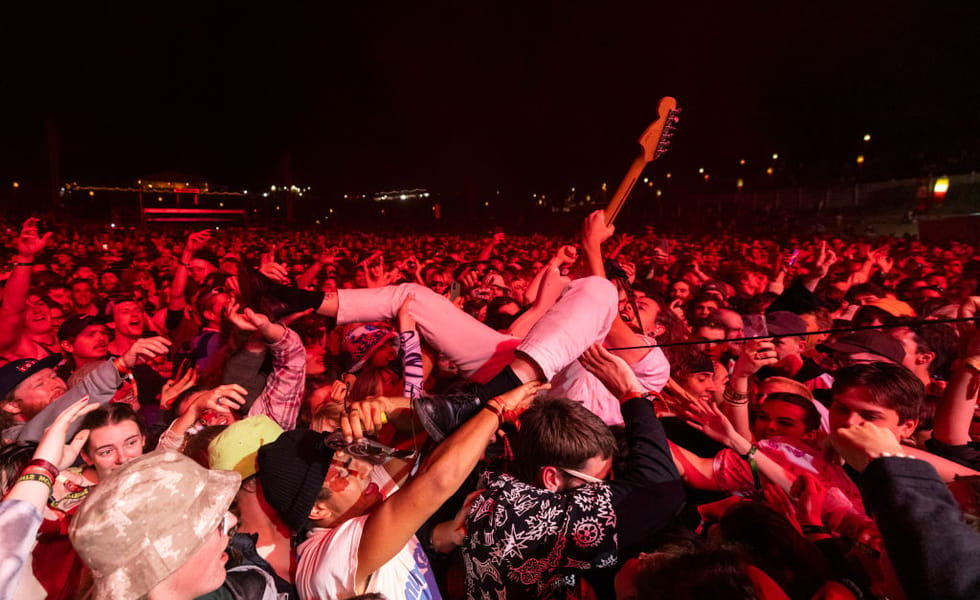
But live music still offers something digital platforms cannot reproduce properly: collective intensity.
Heavy and alternative audiences understand that instinctively. A breakdown lands differently when thousands of people feel it simultaneously. A crowd reaction cannot be replicated through headphones or short-form clips. Streaming may deepen fandom, but it rarely replaces the physical release that comes with live performance.
The numbers reflect that tension clearly.
According to Creative Australia’s Bass Line report, Australia’s music industry generated A$8.78 billion in revenue during 2023–24, with live performance remaining one of the industry’s largest economic drivers. Streaming revenue exists alongside that ecosystem rather than replacing it.
What’s changing is how carefully audiences choose where to show up.
Genre-specific and boutique events continue building loyal communities while broader catch-all festivals face growing pressure to justify increasingly expensive tickets. Niche audiences are informed, connected, and willing to travel when an event feels culturally meaningful.
Streaming helped create that behaviour. But it also raised the standard required to earn people’s time offline.
That’s not necessarily a crisis for live music. If anything, it may be forcing the industry to become sharper, more deliberate, and far less reliant on audiences settling for mediocre experiences simply because there were fewer alternatives.
MORE IN News