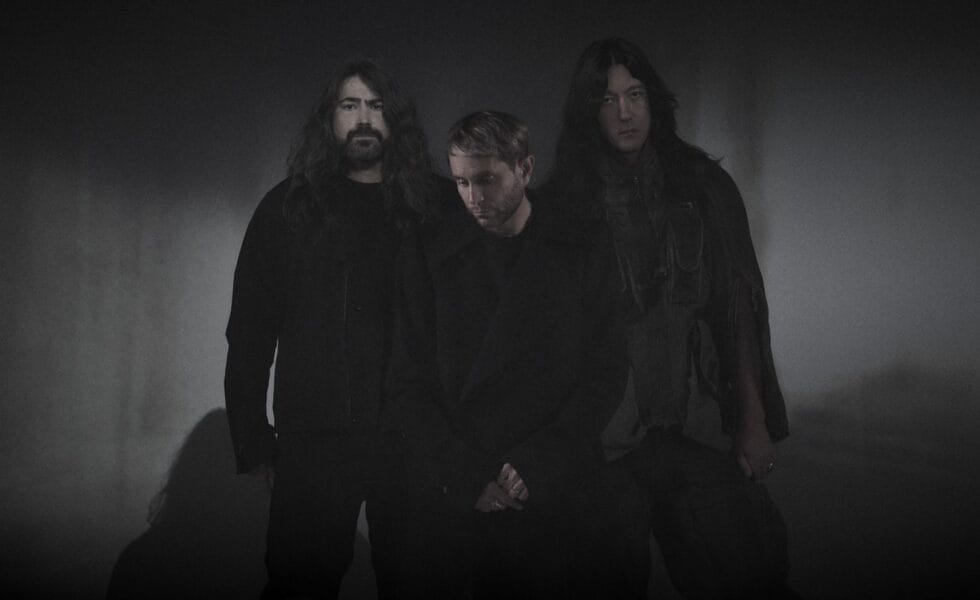
HEALTH’s Jake Duzsik breaks down dread, heavy music and why the band’s new album CONFLICT DLC feels unavoidable.
HEALTH have never sounded comfortable, but on CONFLICT DLC that unease feels less like speculation and more like reportage. The band’s sixth album arrives at a point where the dystopian futures they once hinted at have collapsed into daily reality, and frontman Jake Duzsik isn’t pretending otherwise.
When talking about the record’s emotional core, Duzsik is careful not to overexplain. “I try not to be too overtly personal when I’m explaining lyrical content,” he says, wary of flattening how listeners already connect with the music. Still, the weight behind CONFLICT DLC is unmistakable. He describes a long-running internal battle with “existential dread, coping with meaninglessness in the face of unreckonable death,” compounded by obsessive compulsive disorder and anxiety, conditions he says have only intensified as the world accelerates.
That acceleration is a core part of the band’s evolution. Duzsik points to how constantly digesting catastrophe has reshaped both individual psychology and HEALTH’s place as a band. “Before we were writing dystopian music for a future, primitive, broken society in a sort of conceptual way. Now, society is just that.” CONFLICT DLC is no longer imagining collapse, but rather responding to it in real time.
The album’s title reflects that mindset. Duzsik calls it “a little bit cheeky,” framing it as a companion to RAT WARS, while leaning into the idea of downloadable content as a metaphor for modern life. Endless updates, endless trauma, endlessly piped through screens. “There’s a lot going on. There’s a lot of balls in the air, and it’s pretty hard to ignore.”
That sense of unease isn’t something HEALTH consciously chase, but it aligns closely with Duzsik’s own disposition. “I am definitely naturally tuned into a frequency of unease,” he says, adding that the current state of the world has dragged more people onto that same wavelength. From 24-hour news cycles to algorithmic addiction, he describes a collective agitation that cuts across political lines and cultural silos.
Where CONFLICT DLC differs from its predecessor is in how that dread moves. Duzsik says the band wanted the album to inhabit “the same aesthetic and sonic space as RAT WARS, but…more energetic, more fun, and simultaneously more sad.” Rather than chasing another sprawling, album-first statement, the focus shifted toward songs that hit harder and faster, especially live. “If you go back and do the exact same thing, invariably, either way, people are going to say, ‘I liked this one better.’”
The fan response matters more than ever to HEALTH, particularly as their audience has consolidated around heavy music. Duzsik describes their fanbase as intensely communicative, especially through platforms like Discord, but draws a clear line between connection and overexposure. He avoids personal social media, not out of detachment, but survival. Still, he watches closely. “I think we take it really seriously, like honouring how our fans feel about things,” he says, noting that long gaps between records can kill that dialogue entirely.
That urgency to stay in motion is personal as much as professional. “I really like to stay busy creatively. It’s very therapeutic for me,” Duzsik explains, pushing back against the romanticism of waiting for inspiration. For him, music remains physical and tactile. You don’t find something by doing nothing.
The heavy world has ultimately proven the most receptive home for that ethos. “Absolutely, unquestionably,” he says when asked if HEALTH feel more seen there than in indie spaces. The band’s growth coincided with a deliberate pivot toward heavier audiences, even when it meant alienating old tastemakers. “The moment that we sort of started getting attention in the heavy music world, everything just started growing in a way that it hadn’t before.”
Duzsik contrasts the commitment of heavy fans with the slipperiness of trend-driven scenes. Heavy audiences, he says, aren’t concerned with what’s cool this week. “Those fans, they’re fans of music like they stay fans for life.” That loyalty has reshaped how HEALTH tour, record and think about longevity.
It’s also why Australia remains central to their touring plans. “Absolutely, we should be back in the fall of 2026. Can’t wait,” Duzsik says of plans to come back soon, half-joking that HEALTH come here more than any other band. He points to Melbourne and Sydney consistently ranking among the band’s top cities for listeners worldwide, placing them on equal footing with New York or LA when mapping touring priorities.
CONFLICT DLC doesn’t offer solutions to our current dystopian reality or optimism. It doesn’t need to. It documents a moment where anxiety feels baseline and overload feels permanent, while still finding momentum, volume and release inside of that chaos.
For HEALTH, that balance between collapse and propulsion is no longer theoretical, it’s just the world they’re operating in now.
CONFLICT DLC is out now, and you can check it out here.
RELATED

MORE IN Features