There is a persistent myth that streaming killed live music. It sounds neat, but it does not really match how people behave.
Australians have become more attached to music on their phones, not less attached to music in public. The same person who listens to an artist on the train can still spend hundreds of dollars to see them from the back of a field. The same fan who discovers a song through an algorithm can still want the sweat, noise and inconvenience of hearing it through a festival sound system.
Streaming and festivals are not fighting for the same emotional space. They answer different needs.
One is private, constant and low-friction. The other is physical, expensive and built around memory. The modern music fan does not move neatly from one to the other. They live inside both.
Why Festivals Still Cannot Be Replicated
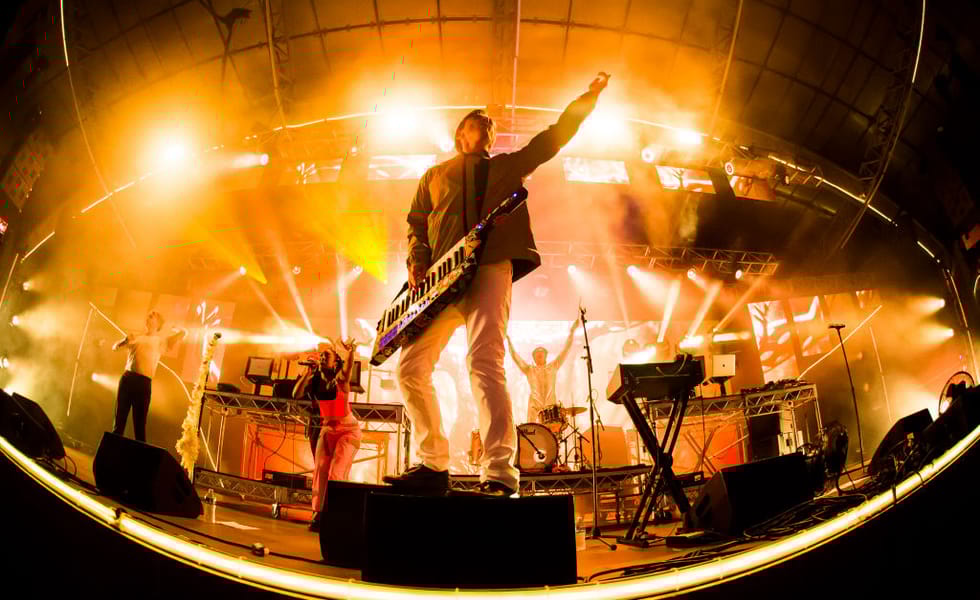
Festivals offer something no platform can properly package: the physical weight of being in a crowd.
That does not mean every festival is magical, or that live music automatically beats recorded music. Anyone who has stood too far from a stage, paid too much for a warm drink, or watched a set through someone else’s phone screen knows the reality is messier than the mythology.
But the draw is still real.
A festival is not just a setlist. It is the trip there, the group chat before it, the outfit choices, the clashes, the weather, the walk between stages, the stranger who knows every lyric, the artist who sounds rougher or better than expected, and the story that becomes bigger after the weekend ends.
That is what streaming cannot reproduce. It can deliver the track, but not the shared setting around it.
Australia’s live performance industry has also shown that audiences are still prepared to spend on major live music experiences. Industry reporting around 2024 live performance data pointed to record revenue across the sector, with contemporary music driving a major share of the growth, largely through major international acts and tours. That does not mean the festival market was healthy across the board. Several major festivals were cancelled or paused, and festival-specific revenue softened. But the wider pattern still cuts against the lazy idea that streaming has made live music feel disposable.
When everything recorded is available all the time, the rare thing becomes the night that only happened once.
What Streaming Does That Stages Cannot
Streaming wins on access.
That is not a small thing. It has changed music more than any festival lineup ever could. A listener can move from a local punk band to a Korean pop act, a 1990s dance track, a new hip-hop release and a half-remembered song from a movie without leaving the couch.
That kind of access has rewired listening habits. Music is no longer tied to radio schedules, record stores, TV slots or whatever happens to be playing in someone else’s car. It is attached to mood, routine and algorithmic suggestion.
This is why streaming now sits at the centre of the recorded-music economy in Australia. It is not just a format. It is the default layer through which many people discover, revisit and organise music.
It has also changed what audiences expect from digital entertainment more broadly. Search-led publishers now cover everything from streaming habits and gaming interfaces to offshore gambling and crypto casino content, where pages such as 99Bitcoins’ crypto casino coverage reflect how online entertainment categories are often packaged around speed, personalisation and constant availability. That does not make those categories equivalent, or remove the regulatory differences between them, but it does show how strongly the streaming-era user experience has shaped the wider online leisure economy.
The common thread is not the content itself. It is the expectation that entertainment should be searchable, immediate and shaped around the individual.
That expectation now follows fans everywhere.
How Fans Blend Both Worlds
Most fans do not choose between streaming and festivals. They use one to feed the other.
Streaming is where discovery happens during the week. Festivals are where discovery becomes social proof. A song moves from a private habit into a public moment. An artist who sat quietly inside a playlist suddenly becomes someone a crowd has gathered to see.
That pipeline is now central to music culture.
A festival lineup is no longer just an announcement. It is a research project. Fans scan the poster, save unfamiliar names, build playlists, send recommendations, compare clashes and arrive knowing far more than they would have twenty years ago. Streaming has made festival audiences more prepared, more selective and more likely to arrive with opinions already formed.
It has also changed the way live music is remembered. A festival set no longer ends when the artist walks off. Clips circulate immediately. Songs spike. Fans revisit the setlist. People who were not there still participate through fragments. The live experience becomes content, and the content sends people back toward the recorded catalogue.
That loop can feel strange, but it is now part of how music moves.
The Real Cost of Loving Live Music
The romantic version of festival culture often leaves out the money.
Loving live music in Australia is becoming more expensive. Tickets are only the beginning. Travel, accommodation, food, drinks, transport and merchandise can turn a single weekend into a serious financial decision.
That cost shapes who gets to participate.
Streaming remains relatively democratic by comparison. Anyone with a phone and a subscription can access a huge catalogue of recorded music. Festivals are different. They reward disposable income, flexible schedules and proximity to major cities or touring routes.
That gap creates a tension inside Australian music culture. Fans may listen widely online, but live attendance is filtered by geography and affordability. A regional listener can stream the same artist as someone in Melbourne or Sydney, but that does not mean they have the same access to the live version of that fandom.
There is also a question of local music. Research from The Australia Institute found that Australian artists’ share of streams in the top 10,000 fell from 12% in 2021 to 8% in 2024. That suggests the streaming environment can widen access while also making local attention harder to hold.
Live music can counter some of that by giving local artists a physical foothold, but it cannot solve the problem alone. A strong festival slot can build loyalty, but everyday listening habits are increasingly shaped by global platforms, global catalogues and global recommendation systems.
That is the unresolved tension.
Streaming gives fans more music than ever. Festivals give them stronger memories. One expands access. The other concentrates meaning. One is built for convenience. The other is built around effort.
Neither has replaced the other.
Instead, modern music culture has become a constant movement between the two: headphones during the week, crowds when the budget allows, and a fan experience that no longer lives in one place.
MORE IN News