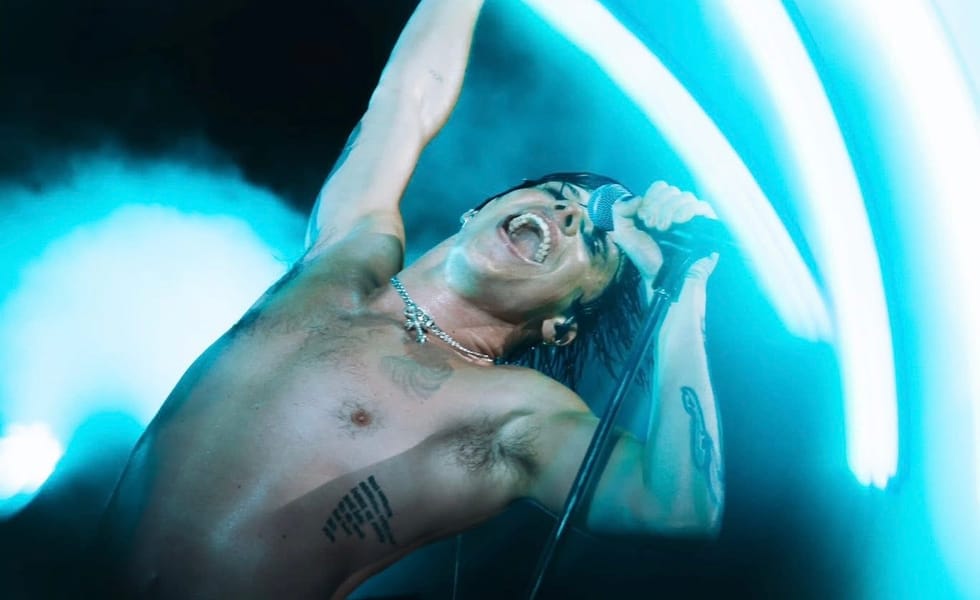
What stood out about the backlash around Yungblud this week wasn’t disagreement.
It was how quickly the hate poured in, and how simultaneous it was. I’ve seen the odd negative comment here and there before. It had definitely been getting more common. But this was different. This was hundreds of unconnected guys piling on within the space of an hour.
As soon as the Australian tour kicked off, comment sections flooded with the same accusations all at once. “Industry plant.” “Fake.” “Poseur.” It didn’t feel like people reacting to music or shows. It felt like a reflex, triggered at scale. A group of men reacting to what Yungblud represents rather than anything he’d actually done.
Watching it unfold, it became clear this wasn’t really about a boat photo, a joke, or even the tour itself. It was about visibility, confidence, and the uncomfortable moment when an artist stops being easy to dismiss.
That context makes Yungblud’s comments on the Australian Today show land differently.
Talking about his career, his influences, and the advice he’s picked up along the way, Yungblud made a simple observation. Legends don’t tear people down.
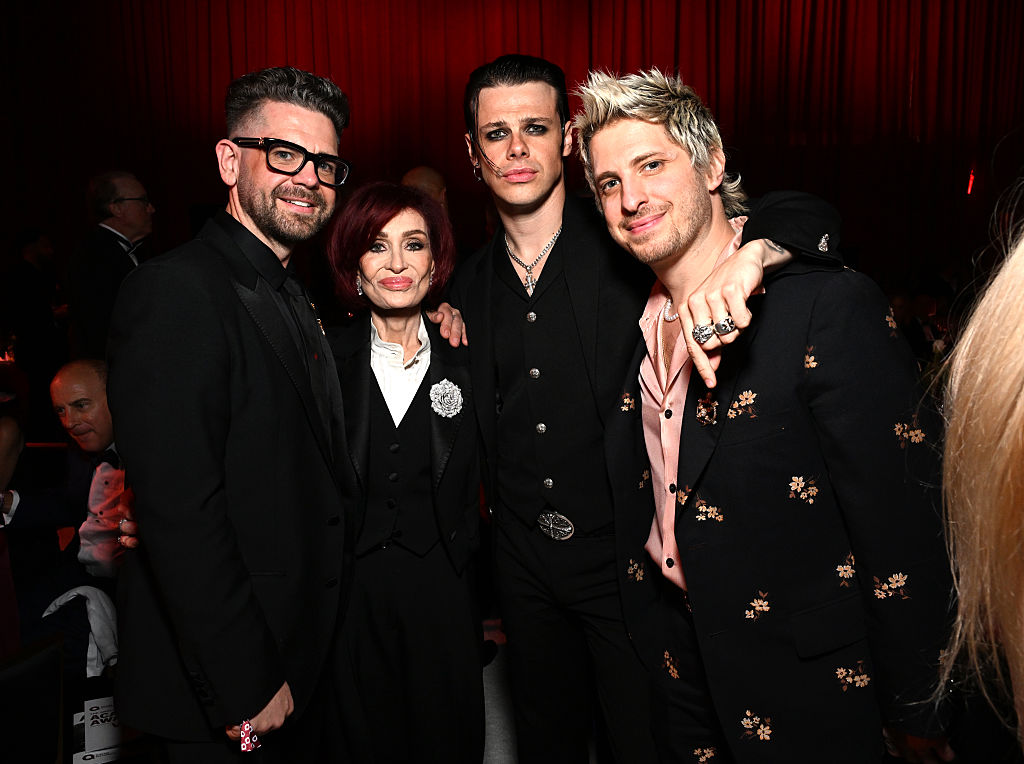
He wasn’t posturing. He was describing what he’s actually seen. When he talks about spending time with artists like Ozzy Osbourne, Billy Corgan, Steven Tyler and others, the contrast is clear. The people who’ve truly made it don’t waste energy policing who belongs. They don’t punch down. They don’t need to.
Instead, they tell him to keep going. To expect love and hate in equal measure. To understand that if you’re not polarising someone, you’re probably not doing anything worth remembering.
That perspective helps explain why Yungblud handled the past week the way he did.
Rather than retreating or apologising, he laughed it off. He joked about his mum calling him to tell him his nude photos were everywhere. He reposted the headlines himself. He didn’t try to shrink the moment or control the narrative. He absorbed it.
That choice matters.
A lot of the anger aimed at him relied on shame. On the idea that embarrassment or ridicule would bring him back into line. When that didn’t happen, the outrage lost its leverage.
What also came through clearly in the interview was how intentional his journey has been. Yungblud openly talks about the first version of his career ending. About Idols being a reset rather than a continuation. About not being an artist who arrives fully formed, but one who evolves in public.
That alone undercuts the “industry plant” label that gets thrown around whenever someone crosses into a new level of visibility. Plants don’t question their own identity. They don’t nearly change their name. They don’t spend years grinding through tours before a credibility moment finally widens the audience.
That shift really did come after his performance of ‘Changes’. It was the point where people outside his core audience took a closer look. And when they did, they didn’t find a gimmick. They found a down-to-earth, hard-working artist who genuinely cares about the people standing in front of him.
It also helps explain why the backlash skewed the way it did.
Yungblud doesn’t fit a narrow idea of what a rock frontman is supposed to look like. He’s emotionally open. He’s theatrical. He’s unapologetically expressive. And he’s openly embraced by women across generations. For a loud and insecure subset of men, that combination is confronting.
Rather than engaging with the music, they reach for delegitimising language. Not because it’s accurate, but because it’s familiar. It’s how gatekeeping tends to surface when certainty starts to slip.
What’s interesting is that Yungblud seems fully aware of this dynamic, and largely unbothered by it.
When he talks about Ozzy, about idols, and about the artists who’ve made it to the top, the lesson he keeps returning to is simple. Everyone gets loved. Everyone gets hated. The difference is whether you let either one control you.
That mindset also explains why he’s been more visible and more willing to engage this time around. He’s not trying to win over people who’ve already decided he doesn’t belong. He’s building for the audience that’s actually there.
That longer view is also playing out in real terms. During the Melbourne stop of his tour, Yungblud confirmed plans to bring BLUDFEST to Australia in 2027.
In that sense, the men snapping this week probably weren’t a shock to him. They were a sign he’d crossed another threshold.
Legends don’t tear people down because they don’t need to. They’ve already survived the phase where other people’s approval mattered more than their own direction.
Watching how Yungblud handled the past few days, it’s clear he’s taken that lesson seriously.
And judging by how loud the reaction was, it’s probably working.
RELATED
MORE IN Music