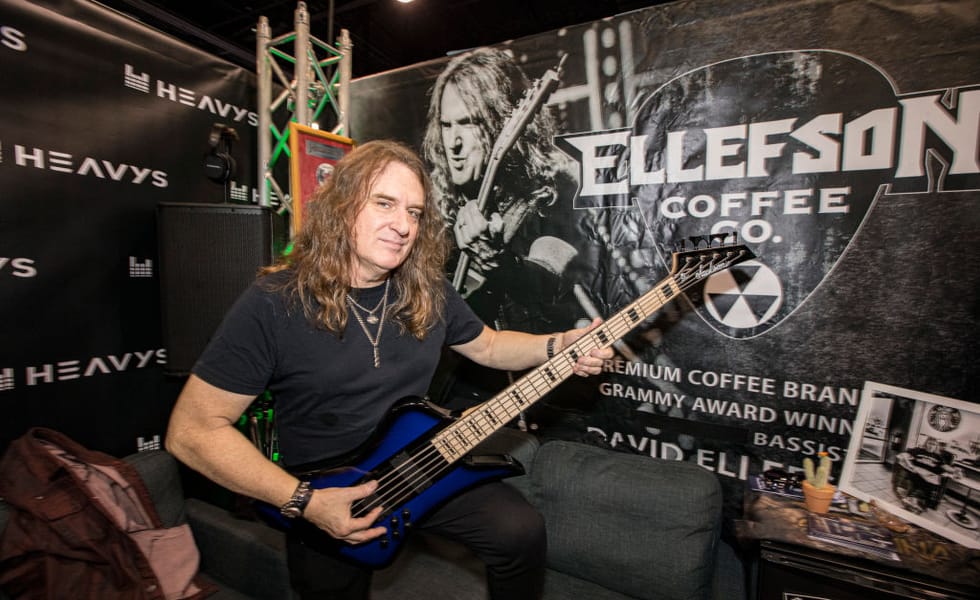
Former Megadeth bassist David Ellefson has weighed in on the growing use of artificial intelligence in music, and he’s not buying the hype.
Speaking with Rock En La Trinchera, Ellefson took aim at AI-generated music tools that are increasingly being used to create melodies, lyrics, harmonies, and full tracks, while the technology keeps creeping further into creative spaces, the veteran thrash musician reckons it’s missing the one thing that actually matters, humanity.
‘To me, it’s just that — it’s artificial. And I don’t know how intelligent it really is. It’s just artificial,’ Ellefson said.
The conversation around AI in music has become impossible to avoid over the last year, labels, producers, and even independent artists have experimented with AI-assisted songwriting and voice replication, while plenty of musicians have openly questioned where the line sits between innovation and creative bankruptcy.

For Ellefson, the issue isn’t technology itself, he pointed to the way digital recording changed heavy music decades ago without replacing the people behind the instruments (per Blabbermouth).
‘People were worried about that with digital technology, making records and recording, and I can honestly say that every record I make, if it’s using digital processing, it’s still me and our humans performing,’ he explained.
‘It’s us playing. And that’s important, that it’s not just stuff taken from somewhere else, that what you’re hearing are real human performances. ‘Cause it’s the human performance that connects with the human listener.’
That’s where he believes AI completely falls apart
‘That’s my problem with artificial intelligence, is it’s not that intelligent and it’s artificial,’ Ellefson added.
‘And that’s never gonna connect emotionally. You’ll never have an emotional connection. Humans connect with each other emotionally, ’cause we’re animals. That’s why we connect with our cats and our dogs and our birds and our pets, because we have a beating heart, we have a pulse, there’s an emotional connection.’
‘And things that are created on a computer, they don’t have emotion to them. They may be smart, but they don’t have heart. And it’s the heart that really connects.’
Ellefson’s comments land at a time when AI-generated music is dividing the heavy music world, some artists see it as another studio tool, while others view it as the beginning of a creatively hollow future built on algorithms instead of lived experience.
For a genre built on sweat, catharsis, and genuine human chaos, it’s not hard to see why plenty of musicians are uneasy.
Follow me for more on the Australian and US Metal Scene:
MORE IN News