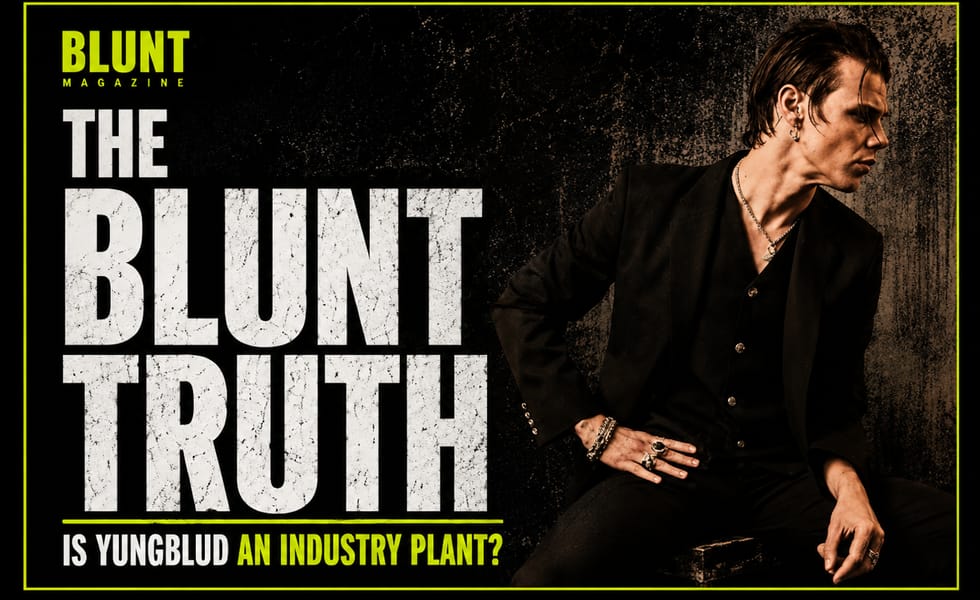
After Ozzy, the Grammy, arena shows and a fully branded BLUDFEST jet, the “industry plant” comments around Yungblud have only grown louder. But the public record tells a different story: industry support, yes — hidden manufacture, no.
Every time Yungblud has a major moment now, the same comments appear.
Industry plant.
Fake rocker.
Poser.
Manufactured.
It happened after his Back To The Beginning performance. It happened around the Grammy attention. It happened when he turned up to BLUDFEST in a fully branded aircraft. It will probably happen again the next time he does something massive enough to cut through.
But the problem with the accusation is simple: it treats the breakthrough as the beginning.
Yungblud did not appear out of nowhere. He became unavoidable after years of visible work.
That distinction matters.
What Does “Industry Plant” Actually Mean?
The term “industry plant” gets thrown around so loosely now that it has almost stopped meaning anything.
Being signed to a label does not automatically make someone an industry plant. Having management does not make someone an industry plant. Getting help from people who understand the music business does not make someone an industry plant. If that were the case, almost every successful artist in modern music would qualify.
The more useful definition is narrower: an artist presented to the public as independent, grassroots or organically discovered, while secretly being shaped, funded or manufactured by industry machinery behind the scenes.
That is why the Yungblud claim falls apart.
Because yes, he had industry support. That part is real. His early releases were tied to Locomotion and Geffen. He has had experienced management. His career was not built in total isolation.
But industry support is not the same thing as industry manufacture.
And when you actually look at the public record, what appears is not a secret overnight launch. It is a long, messy, fan-first build through live rooms, alternative scenes, touring, community work and constant public development.
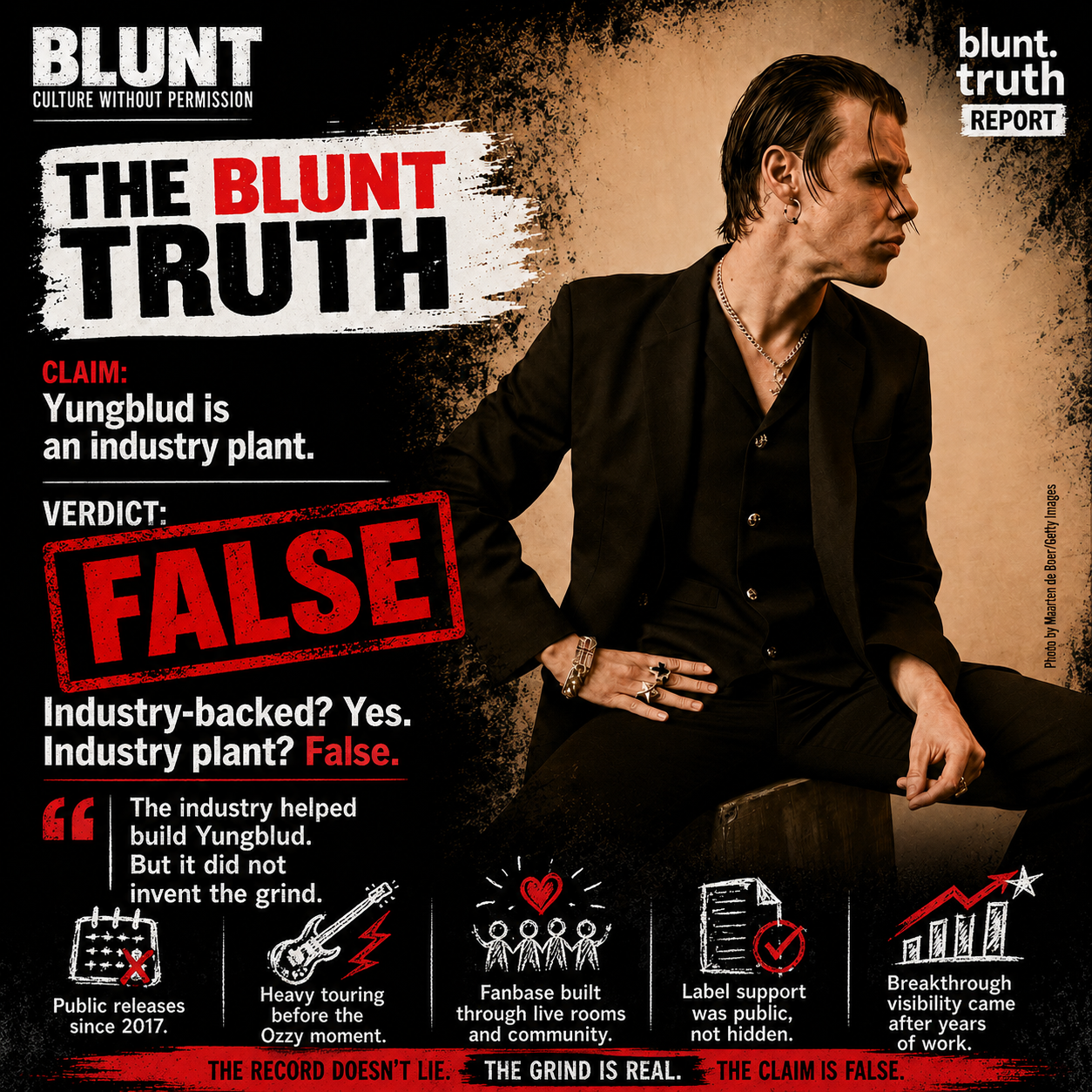
Claim: Yungblud is an industry plant.
Yungblud is not an industry plant. He has had real industry backing, including label support and experienced management, but having a team is not the same thing as hidden manufacture. The public record shows years of releases, touring, fan-building, alternative scenes and visible development before the Ozzy, Grammy and BLUDFEST moments made him unavoidable.
Why?
- The “industry plant” label implies hidden manufacture, not simply having label support.
- Yungblud’s industry backing has been public, not secretly disguised as a fake grassroots rise.
- His public release history dates back to 2017.
- He was already touring heavily by 2018 and 2019.
- His early world was tied to live rooms, alternative scenes, Warped Tour and fan-facing work.
- He built a visible fan community years before the Ozzy moment.
- The Ozzy, Grammy and BLUDFEST moments were breakthrough visibility, not the beginning of the story.
Industry-backed? Yes. Industry plant? False.
The Timeline Tells A Different Story
The reason the industry plant accusation fails is that Yungblud’s rise is not hard to trace.
The record is there.
First releases. Small rooms. Warped Tour. Support slots. Fan photos. EPs. Albums. Sold-out dates. Fan accounts. No.1 albums. BLUDFEST. Then Ozzy. Then the wider world finally caught up.
That is not a clean corporate launch. That is a public build.
He Chose The Harder Lane
There is another part of the story that gets flattened by the “industry plant” argument.
Yungblud chose a difficult lane.
In the late 2010s, plenty of young artists were moving away from guitars. Pop, rap, electronic production and algorithm-friendly singles were the safer commercial paths. Guitar music was hardly the easiest route to mass visibility.
Yungblud’s early world was different.
It was alternative. Loud. Political. Guitar-driven. Messy. Fan-facing. Warped Tour-adjacent. Built for rooms where you either connected with the crowd or you didn’t.
That matters because if the goal was to manufacture the simplest mainstream pop success story, this was a strange way to do it.
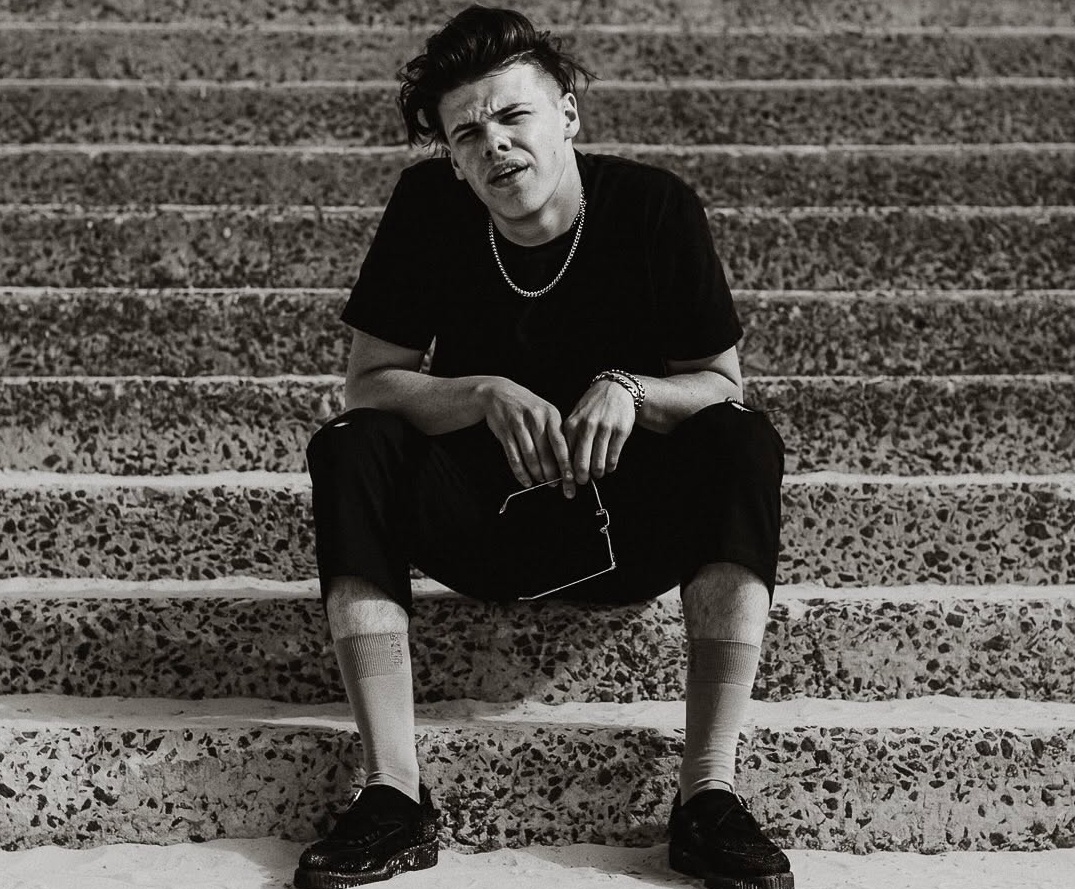
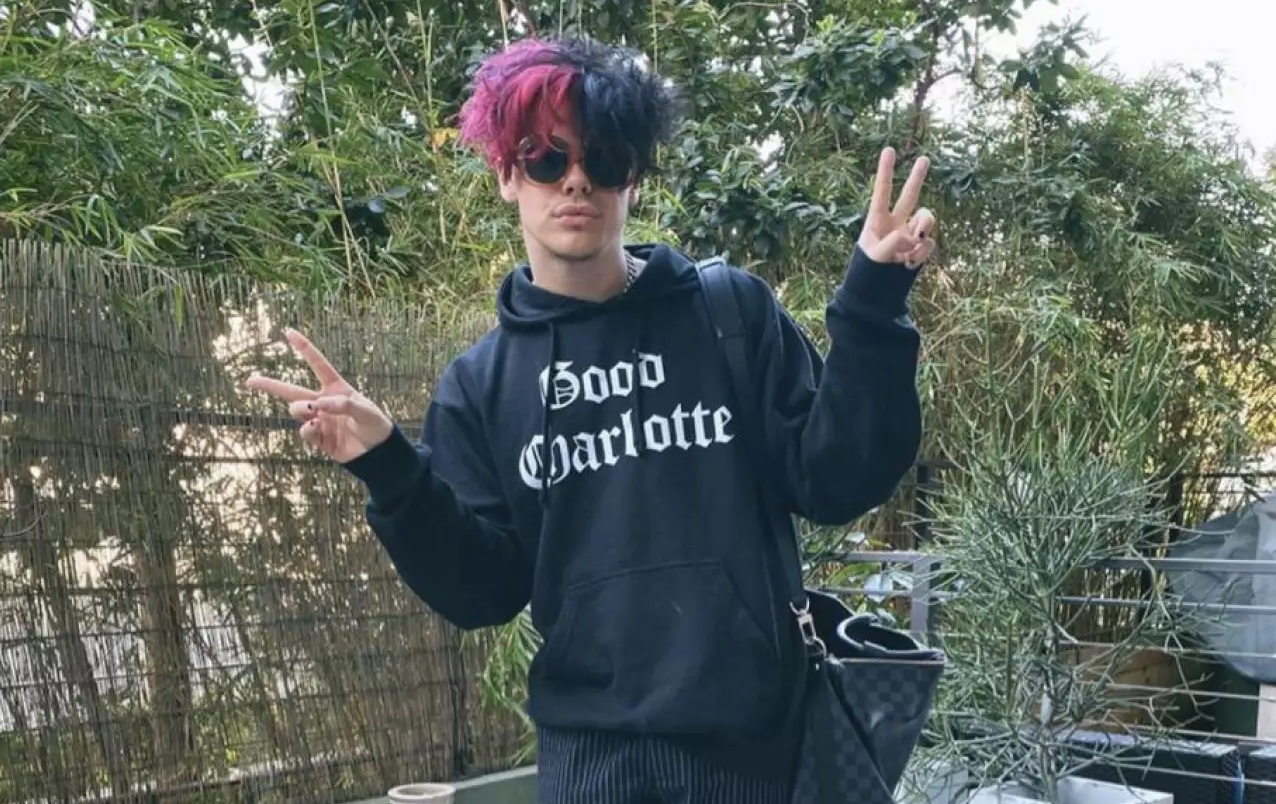
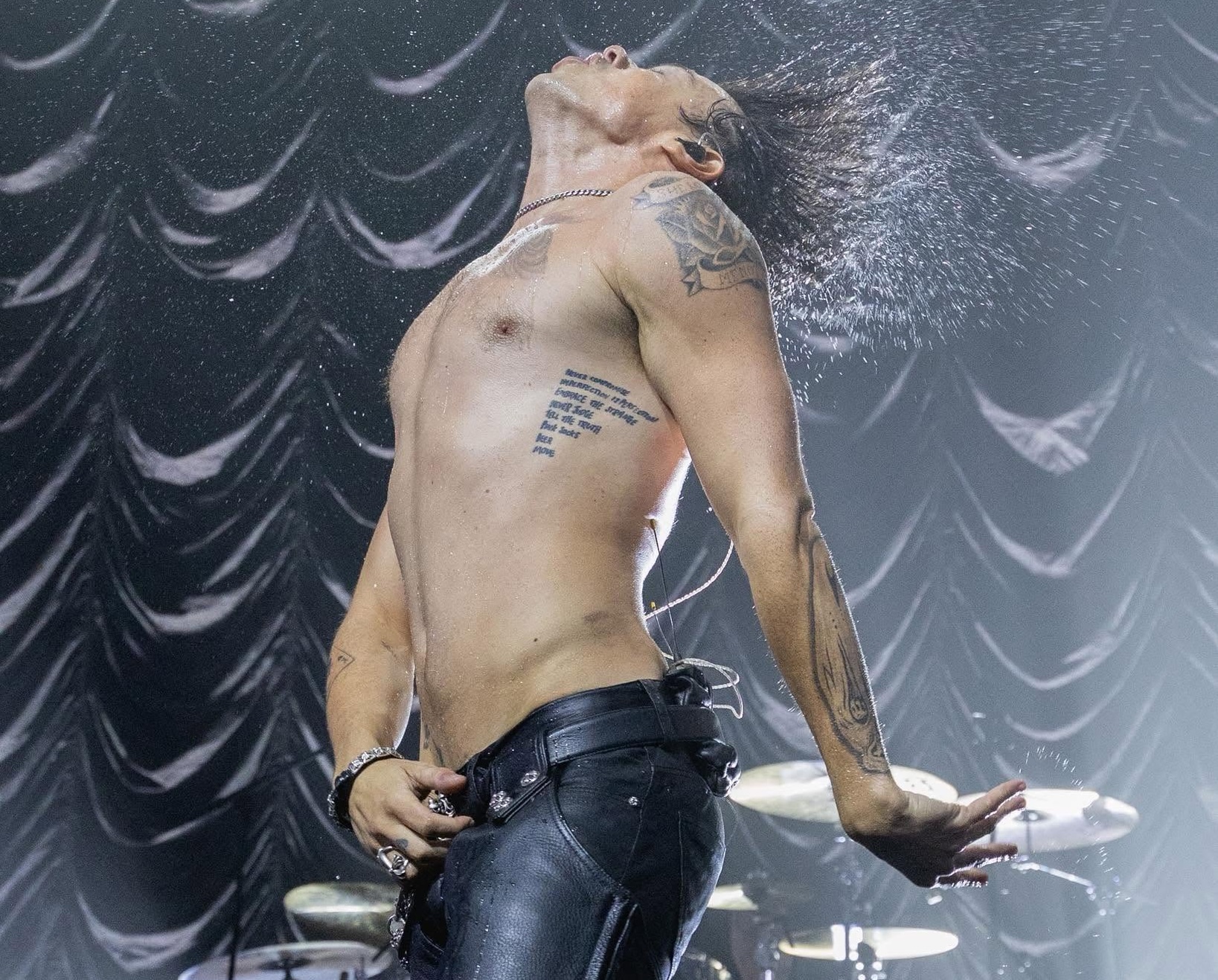
He did not arrive as the fully formed arena-rock figure people see now. He grew into that role publicly. You can track the evolution from the early release era, to the pink-haired Weird! period, to the shirtless, theatrical, arena-level performer who suddenly made older rock fans pay attention.
That growth is part of the story.
A manufactured artist usually arrives with the edges sanded off. Yungblud’s entire appeal was that the edges were the point.
The Industry Support Was Real
A fair version of this article has to say the obvious: Yungblud was not operating with no industry support.
He had management. He had label backing. He had people around him who knew how to develop an artist.
Tommas Arnby and Adam Wood have both been publicly linked to his management. Locomotion, Geffen and Polydor appear across the public record of his releases and career development. His team has also been recognised for the way it built and nurtured his fanbase.
So if someone’s argument is simply:
“Yungblud had a team.”
Yes. He did.
But that is not enough.
The real question is whether that team secretly manufactured a fake grassroots story, or whether they helped develop an artist who was already relentlessly building his own world.
The evidence points strongly to the second version.
Industry-backed? Yes.
Industry plant? False.
The Fan Work Is Everywhere
The most consistent thread in Yungblud’s story is not secrecy. It is fan work.
In the early touring years, he was not just playing shows and disappearing. He was meeting fans, taking photos, answering messages, building direct relationships and making the audience feel like they were part of the project.
That has remained central to the whole thing.
When Weird! hit No.1 in the UK, he did not frame it as a solo achievement. He talked about the fans. He even planned to melt down the award and turn it into safety pins for them.
BLUDFEST followed the same logic. It was pitched around affordability and community, not just another artist-curated festival with a logo slapped on top. The “Make a Friend” element for solo attendees was not the kind of thing you add if you see fans purely as ticket buyers.
That is why the “industry plant” accusation feels so off.
Industry support can open doors, fund campaigns and put an artist in better rooms.
But it cannot fake years of fans feeling personally invested unless the artist has done the work to make them feel that way.
Australia Saw The Build Early
There is also a personal reason the “overnight” framing has never quite matched what I saw.
Years before I had anything to do with Blunt, I had a chance encounter with Yungblud’s touring world during an Australian run.
A friend of mine owned the bar his crew had hired after a Sydney show. What we initially thought might be a public afterparty turned out to be a small private gathering, and I ended up spending the night drinking with around 15 people from Yungblud’s camp.
I wasn’t there as media. I wasn’t there for an interview. I was just a friend of the bar owner who accidentally ended up in the room.
What stuck with me was how grounded and close-knit the crew felt. They were talking tour logistics, home, people back in England and the reality of keeping the whole thing moving. It didn’t feel like a polished corporate machine. It felt like a tight group building something together.
One night doesn’t prove a career. But looking back now, it matches the public record: Yungblud’s rise looks far more like years of touring, fan-building and team-building than a sudden manufactured arrival.
And Australia is a useful example of that.
His first Australian performance was reportedly a small-room Sydney show in 2017. By 2019, he was selling out Australian dates. By 2026, he was operating at arena scale.
That is the arc people miss when they only discover the artist after the headline moment.
Back To The Beginning Changed The Audience
The Back To The Beginning performance was clearly a turning point.
For many older rock fans, it was the first time Yungblud made sense. Suddenly he was not just the loud young artist their kids liked. He was standing inside the Ozzy orbit, singing ‘Changes’ with enough conviction to make people reassess him.
That moment mattered.
But it did not create Yungblud.
It revealed him to people who had not been paying attention.
That is the key difference.
To longtime fans, the Ozzy moment felt like a payoff. To new observers, it looked like a sudden leap. Those are two very different experiences of the same event.
The same thing happened with the Grammy win and the BLUDFEST jet. If you only look at the spectacle, it can seem like the machine arrived fully assembled. If you look at the years behind it, the spectacle becomes the result.
Why People Reach For “Industry Plant”
The industry plant accusation says as much about internet culture as it does about Yungblud.
People often encounter the result before they encounter the record. They see the jet, the Grammy, the Ozzy connection, the arena shows, the press coverage — and they assume the scale must have been manufactured.
Sometimes suspicion is reasonable. The music industry does manufacture narratives. Labels do build artificial momentum. PR teams do create fake grassroots energy. Audiences are not wrong to be sceptical.
But suspicion still needs evidence.
In rock and alternative culture, there is also an old gatekeeping reflex around who gets to be considered “real.” Every generation has its version of it. Too polished. Too dramatic. Too young. Too online. Too emotional. Too commercial. Too visible.
Yungblud hits almost every trigger point.
He is theatrical. He is emotional. He is loud. He is internet-native. He has young fans. He has major label backing. He has now entered spaces older rock fans see as sacred.
So the backlash was probably inevitable.
But calling someone a plant because you personally discovered them late is not analysis.
It is just a refusal to look at the timeline.
The Blunt Truth
Yungblud had help.
He had labels. He had managers. He had a team. He had industry relationships.
But none of that equals “industry plant.”
The public record shows years of releases, live shows, support slots, festival appearances, fan-building, community work, chart growth and visible artistic development before the Ozzy, Grammy and BLUDFEST moments made him unavoidable.
That does not make him untouched by the industry.
It makes him an artist who used the industry without being invented by it.
The industry helped build Yungblud.
But it did not invent the grind.
Questions Fans Are Asking
The industry plant claim keeps following Yungblud online. Here’s what fans are asking — and what the public record actually supports.
Is Yungblud an industry plant?
No. Blunt’s assessment is that the claim is false. Yungblud has had real industry backing, but the public record shows years of releases, touring, fan-building and visible development before his wider rock-world breakthrough.
Was Yungblud on Disney before music?
Yes. Before Yungblud became a major music figure, Dominic Harrison appeared as Oz in Disney Channel’s The Lodge. That background is relevant, but it does not prove he was an industry plant. A public acting credit is not the same thing as hidden manufacture, and it actually supports the broader point: his entertainment background was visible, not concealed.
Did Yungblud have label backing?
Yes. Yungblud had label and management support. But having a team, a label or an experienced manager does not automatically make an artist an industry plant.
What does industry plant actually mean?
The term is usually used to describe an artist presented as independent or organically discovered while secretly being manufactured or pushed by industry machinery behind the scenes. That is different from an artist having public label support.
Did Yungblud become famous because of Ozzy?
The Ozzy / Back To The Beginning moment clearly changed the scale of Yungblud’s visibility, especially with older rock audiences. But it did not create his career. It amplified a career that had already been built over years.
Was Yungblud DIY?
Not in the strict “no label, no team” sense. But much of his rise reflects DIY culture: live rooms, alternative scenes, direct fan work, constant touring, community-building and a close crew pushing the project forward.
Why do people call Yungblud fake or a poser?
Rock and alternative culture have always had authenticity wars. Yungblud’s theatrical style, young fanbase, major label support and sudden wider visibility make him an easy target for gatekeeping. But the timeline tells a more grounded story.
Joel King
Join Joel’s Inner Circle
MORE IN News