Amy Taylor’s dispute with photographer Jamie Nelson began over images from a Vogue Portugal shoot. A US court has now dismissed the singer’s federal false-endorsement claim, but her other claims survive and Nelson has been given permission to amend her own copyright infringement claim.
Amy Taylor, the singer of Amyl and the Sniffers, posed for photographer Jamie Nelson in Los Angeles in May 2025. Images appeared in the July issue of Vogue Portugal. Nelson later offered photographs from the shoot as fine-art prints and a photo zine under the title Champagne Problems.
Taylor says she agreed to the magazine shoot, not those later commercial uses. She sued Nelson and her studio in December 2025. Nelson maintains that her copyright gives her the right to exhibit and sell the photographs.
Nelson and her studio responded with copyright counterclaims, bringing allegations of their own into the same lawsuit. They say Taylor and the band’s company, Amyl and the Sniffers Pty Ltd, used the photographs on social media without permission.
Following a September 14 hearing, US District Judge George H. Wu has ruled on three requests to dismiss parts of the case. Taylor’s federal false-association claim has been dismissed with prejudice, and the band company’s challenge to US jurisdiction has failed. Taylor’s remaining claims continue, while Nelson and her studio can rewrite their infringement counterclaim after its dismissal. The lawsuit itself is not over.
Taylor cannot simply rewrite her federal false-endorsement claim again.
The September 15 written ruling dismisses it with prejudice, meaning she was not given another chance to amend that claim. Brought under the Lanham Act, it alleged that Nelson’s use of Taylor’s identity falsely suggested the singer endorsed or was associated with Nelson’s products and photography business.
Wu had already questioned whether the federal claim could survive. Taylor’s amended complaint supplied further allegations and screenshots of fans who apparently believed the prints were a collaboration with her. The judge remained unpersuaded, writing that many of the additions “do not allege facts at all, but rather present legal argument or bare legal conclusions.”
For this federal claim, it was not enough to show that a viewer had assumed Taylor endorsed the prints. Wu treated Nelson’s use of the photographs as part of an expressive work and applied the Rogers test, which protects artistic expression. The amended complaint still failed to establish the explicitly misleading conduct required in this case.
“I am grateful that the Court has now dismissed the main federal claim with prejudice,” Nelson said in a statement supplied to Blunt, describing the outcome as “a major win for photographers, artists, and creators everywhere”.
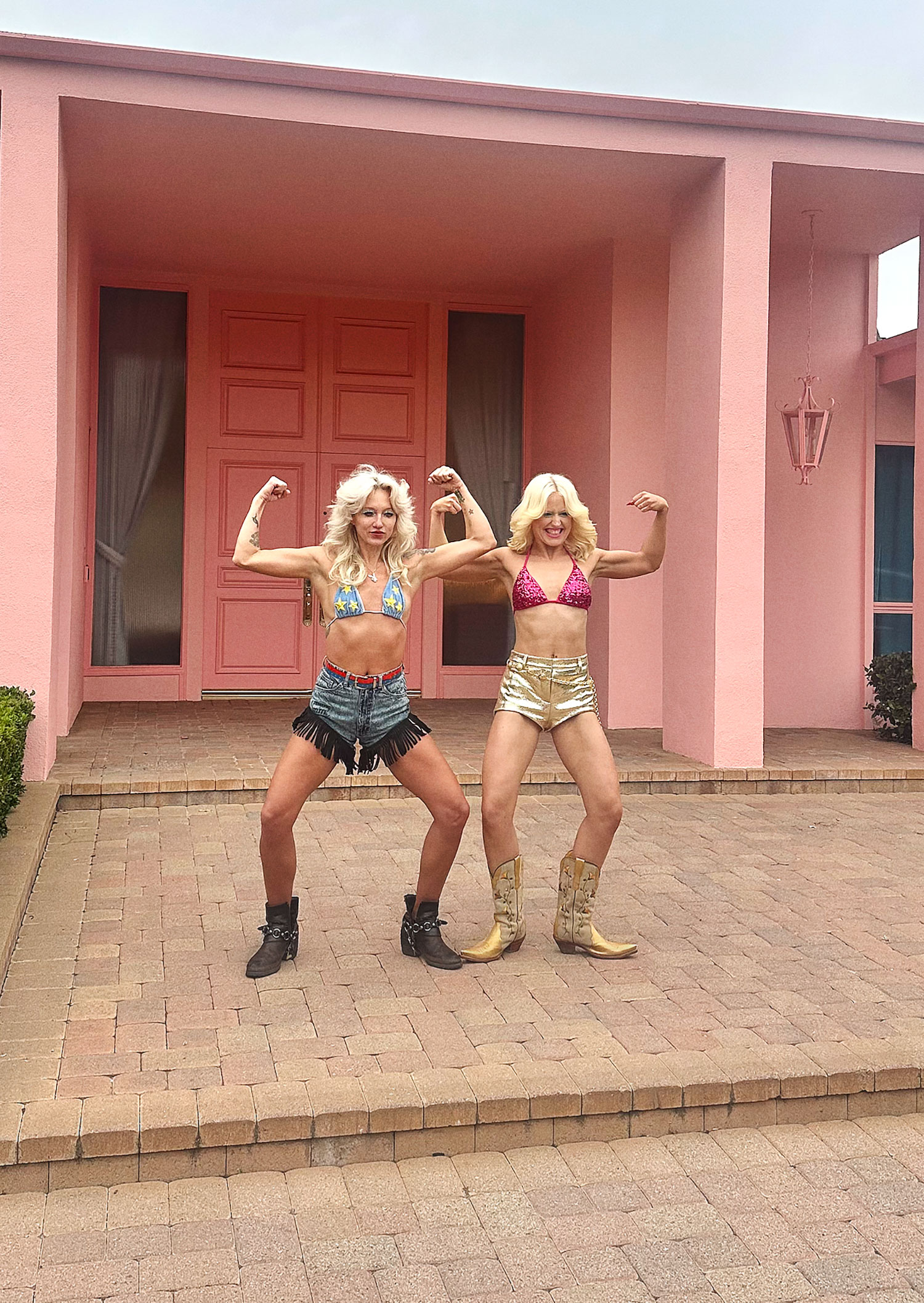
Taylor’s claims about the commercial use of her identity remain before the court.
Her two California publicity-rights claims concern the alleged use of her name and likeness to promote products and photography services without permission. Wu rejected the argument that copyright ownership necessarily barred those claims. California law does not require the same showing of misleading endorsement, so the federal dismissal does not dispose of them.
Taylor’s implied-contract claim also survives. She alleges that the parties agreed to limit the shoot and use of her identity to the Vogue Portugal editorial. An implied agreement can arise from how the parties dealt with each other, even without a written contract. Wu found that Taylor had alleged enough for this claim to proceed. She still has to prove the agreement existed and that Nelson broke it.
Wu described himself as “somewhat skeptical” where the contract theory appeared to rest on Nelson merely reproducing and displaying her copyrighted photographs. He left Nelson free to argue again, once the evidence is more developed, that federal copyright law displaces the contract claim. For now, it remains in the case.
Amyl and the Sniffers Pty Ltd failed to get out of the US case on jurisdictional grounds.
The company is a separate party from Taylor, who brought the original lawsuit. Its jurisdictional challenge concerned the court’s authority to hear Nelson’s counterclaims against it. After oral argument on September 14, Wu adopted his earlier tentative ruling and denied the company’s motion.
The court examined the US tour promotion, ticket sales, merchandise and commercial relationships covered in Blunt’s report on the band’s American following. Wu assessed the company’s connections with the United States as a whole under a federal jurisdiction rule, rather than relying solely on its connections with California. Those reasons now form part of the adopted ruling.
Taylor separately argued that Australia was the more appropriate place to hear Nelson’s counterclaims. That argument also failed. The court noted that the shoot took place in Los Angeles, Nelson and her studio operate in California, and Taylor had chosen the same court for her own claims. Much of the evidence concerns online activity, and many of the same witnesses could be needed for both sides’ claims.
Nelson’s copyright infringement counterclaim was dismissed too, with permission to amend it.
The dismissal was without prejudice, so she and her studio can try again. Their current counterclaim did not sufficiently allege infringement within the United States. The band had joined Taylor’s dismissal motion, so this decision applies to the identical claims against the company as well.
Nelson’s lawyers argued that the photographs had been uploaded to Meta’s servers in California. But those allegations appeared in their later briefing rather than the counterclaim itself. Wu said he could not use the lawyers’ additional assertions to fill that gap, while allowing them to include further facts in an amended pleading.
On the other aspects of the infringement claim, the court found enough detail in the allegations of copyright ownership and unauthorised copying. It has not decided that infringement occurred. Nelson and her studio’s separate request for a declaration setting out their rights to display, reproduce, distribute and sell the photographs remains before the court. Those rights have not yet been decided through that claim.
In a follow-up to Blunt, Nelson confirmed that the amended infringement counterclaim had not yet been filed. She expects the changes to be straightforward, saying the judge had identified what needed to be added.
The next court appearance concerns mediation rather than another decision on the remaining claims.
A mediation-status conference is listed for September 21 at 8:30am in Los Angeles. The parties have proposed different magistrate judges to conduct mandatory mediation, where they would try to reach a settlement. Their September 15 joint report records those preferences, not an agreed appointment or a deal.
Nelson told Blunt that the conference would take place by phone and deal with that selection, rather than arguments about the remaining claims.
MORE IN Music