The most revealing thing about live streaming is how quickly it stopped looking like a person with a webcam.
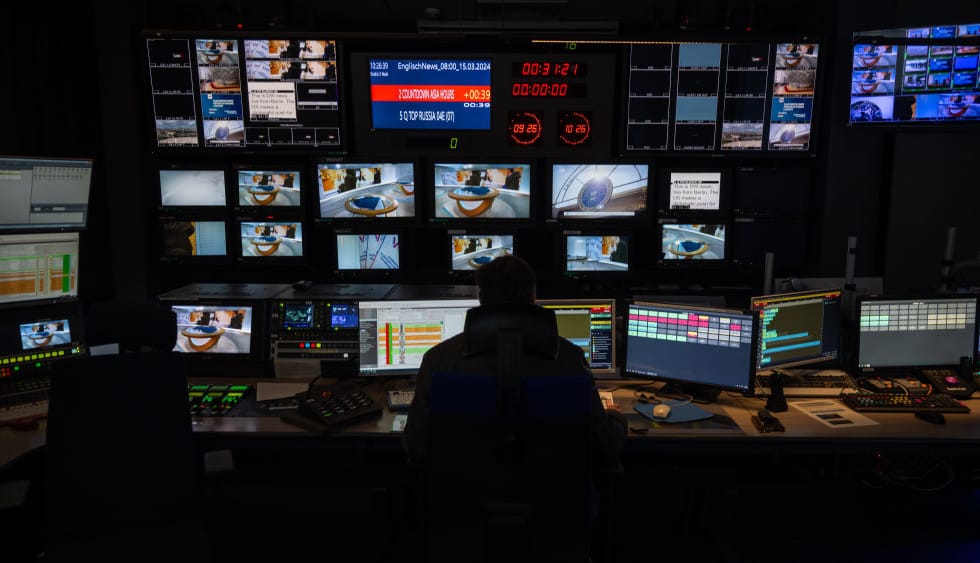
Some of the largest operations now resemble television studios, complete with rosters, fixed sets, control rooms and people whose job is simply to stay on camera for hours at a time.
Evolution, the Swedish-founded supplier of live-dealer gaming, ended 2025 with 22,475 employees across 24 studios. More than 85 per cent of its workforce was involved in operational gaming activity, with game presenters making up its largest professional group. That is not a side feature of the business. It is a broadcast workforce hiding in plain sight.
What Cheap Bandwidth Actually Changed
Before live video became cheap and reliable, a digital card game had almost no performance element. Software produced a result, a few animations acknowledged it and the exchange was over in seconds. Nobody needed to be on camera because there was no camera.
Once continuous video became practical at scale, the room changed. Tables started operating more like small television sets than software interfaces. Presenters worked to rosters, cameras stayed locked on the action and control-room staff kept pictures, audio and game data moving together. Recruitment material began talking about on-camera training and broadcast studios rather than simply game operations.
The hardware changed with it. Modern roulette equipment can feed live result data into a production system while the camera keeps showing the physical wheel. The interesting shift is not that software became better at imitating a table. It is that the table itself became something designed to be filmed.
The Name on Screen Is Only Part of the Production
That production chain is easy to miss. The operator name on screen may not employ the dealer, own the studio or run the broadcast system underneath it. The same separation can be seen in overseas live blackjack formats, where a table can appear under one consumer-facing brand even though the studio, presenters and technical infrastructure belong to specialist suppliers.
Television has worked this way for decades. A network can carry a program without owning the studio that made it, and a presenter can be the most visible person in the frame without owning any part of the production. Live gaming arrived at a similar model through a very different route.
That matters because the human presence is not decorative. A presenter dealing at a recognisable pace, reacting to the table and acknowledging chat creates a different viewing experience from clicking through an automated interface. The software still matters, but the person on camera becomes part of the format.
The Creator Economy, Running Backwards
On the surface, the set-up looks a little like creator culture. There is a face, a camera, a live audience and a stream of comments. Economically, though, it runs in the opposite direction.
A conventional streamer accumulates an audience, an archive and a channel identity over time. Those things can become assets that travel with the creator. A studio presenter usually accumulates none of them. There is a shift, a uniform, a set and somebody else’s brand behind them. When one presenter leaves the table, another can take over and the feed continues.
That tension is what makes the format interesting. Live gaming borrows the intimacy of streaming without handing the presenter the independence that normally comes with being a streamer. It feels personal on screen while remaining highly industrial behind it.
What Really Got Streamed
The important technological change was not a new way to shuffle cards or spin a wheel. It was the collapse in the cost and difficulty of continuous video. Once a table could be filmed, encoded and distributed reliably at scale, an entire workforce and production system could grow around it.
That is why these studios now look less like a software feature and more like a broadcast industry that happens to have cards and wheels in the room. The randomness was always there. What changed was the camera.
MORE IN Culture