Real-time payments are removing friction across digital platforms, quietly reshaping how people act, decide, and stay engaged online.
There was a time when the delay was part of it.
You’d finish playing, close the tab, and wait. Hours, sometimes days. The gap between action and outcome stretched just long enough to cool everything down. The system moved slowly, and people accepted it because everything else did too.
That gap doesn’t really exist anymore.
Money moves instantly now. Rent clears in seconds. Bills split before you’ve left the table. The expectation isn’t patience, it’s immediacy. And once that expectation sets in somewhere, it doesn’t stay contained. It spreads.
Gambling didn’t create that shift. It followed it.
What’s changed isn’t just the technology underneath, but the tolerance above it. Waiting hasn’t become impossible. It’s just started to feel wrong. Slightly out of sync with everything else people are used to.
That’s where terms like payid online casinos get pulled into the conversation. Not as a formal category, but as a reflection of how payment behaviour is bleeding into adjacent digital environments.
Because the real shift isn’t about faster payments. It’s about removing the pause.
The moment between deciding to act and actually acting has collapsed. The friction that used to slow things down, logging in, confirming details, waiting for funds, has been stripped back to almost nothing. What’s left is a straight line from intent to action.
And when that line gets shorter, people move along it more often.
It’s the same pattern seen everywhere else. Streaming platforms removed the need to wait a week for the next episode. Food delivery removed the need to plan ahead. Social feeds removed the natural stopping points.
Each time, the system doesn’t just become more efficient. It becomes harder to step away from.
Some digital platforms have started to mirror that rhythm.
Open the app. Tap. Funds appear. Interaction begins. No real interruption, no reset point. Just continuation.
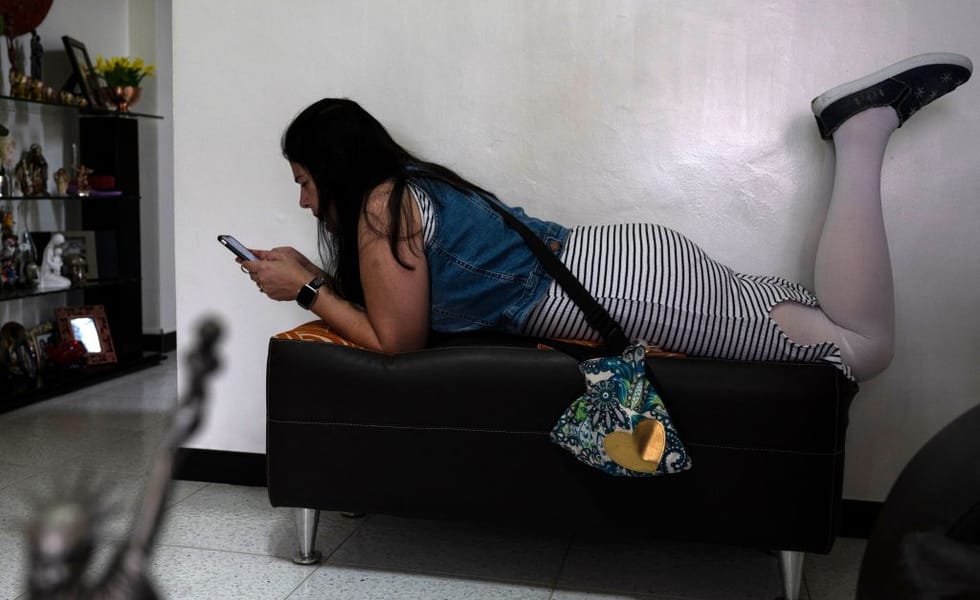
On mobile, this becomes even more pronounced. There’s no setup. No deliberate moment. It happens in between things. While waiting, while scrolling, while half paying attention to something else.
The action fits into the gaps of everyday life instead of asking for dedicated time.
And speed is what makes that possible.
A slow transaction used to act as a kind of soft barrier. Not a hard stop, but enough resistance to make someone reconsider, or at least pause. Remove that, and the decision becomes lighter. Easier to repeat.
That doesn’t just change how often people engage. It changes how the entire experience feels.
Less segmented. Less contained. More like a continuous loop than a defined session.
From the platform side, this isn’t framed as a behavioural shift. It’s framed as improvement. Better user experience. Faster processing. Reduced friction.
And technically, that’s all true.
But underneath that language is something simpler. The system is aligning itself with the pace people already live at. Not asking them to slow down, just meeting them where they are.
That’s why speed has quietly become one of the main things being pushed. Not loudly, but consistently. Instant transfers. Real-time processing. No delays.
Not because it sounds exciting, but because it removes a reason to leave.
Once the process feels seamless, it stops being something you think about. It becomes part of the environment. Invisible, but shaping everything.
And when payments become invisible, they stop acting as checkpoints.
There’s no moment to reflect, no natural break in the sequence. Just progression.
That’s where things start to blur.
The difference between acting once and acting again gets smaller. The gap between input and outcome tightens. The entire cycle compresses into something quicker, smoother, harder to interrupt.
It doesn’t feel dramatic. It feels normal.
That’s the point.
Because the platforms gaining traction aren’t necessarily doing something radically new.
They’re removing whatever still feels slightly out of step with how people already behave elsewhere.
Speed isn’t the feature. It’s the expectation.
And once something becomes expected, it stops being noticed at all.
It just becomes the way things work.
MORE IN Culture