Sick notes are meant to prove illness, but in reality they serve a different purpose. Why documentation matters more to systems than recovery.
The official purpose of a sick note is simple. Prove you were too unwell to work.
But that’s not really what they’re doing anymore.
Most people already know when they’re sick. Their boss usually knows too. There’s rarely some big investigation into whether you had a cold or just needed a day off. The note doesn’t clarify anything. It just formalises it.
You wake up feeling off. Not dying, but not right either. Head heavy. That slightly foggy feeling where even answering emails feels like too much. There’s a half-drunk glass of water next to the bed, maybe some Panadol you took at 3am that didn’t really do anything.
You already know you’re not going in.
You send the message. It gets accepted.
That should be it.
But it’s not.
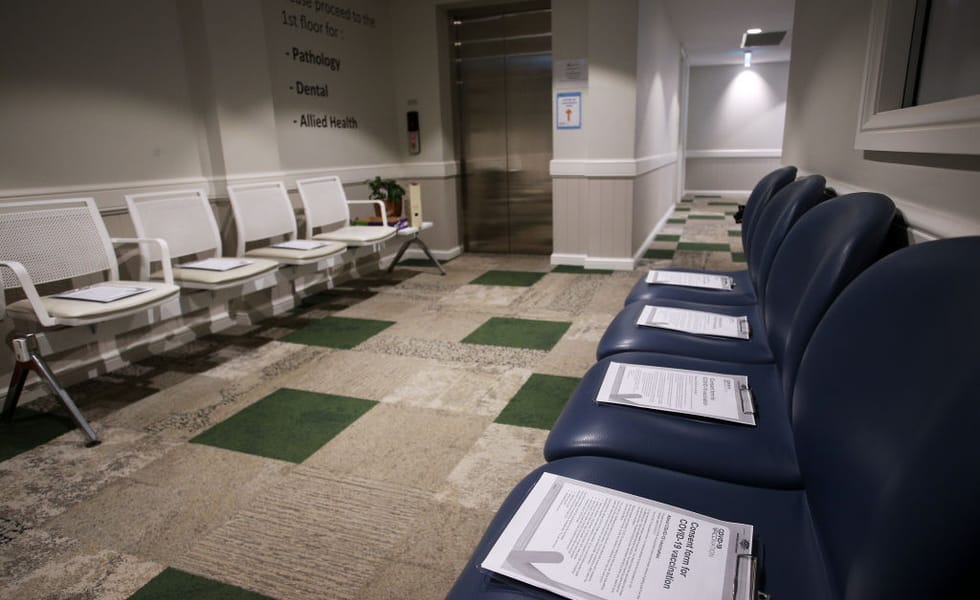
Instead of actually resting, you’re expected to go validate the decision. Sit in a waiting room scrolling your phone, half-aware you probably shouldn’t even be there. Repeat symptoms you’ve already run through in your own head. Get a note confirming something that wasn’t really in question to begin with.
It’s not about getting better. It’s about making it official.
What it actually does is create a record.
Not for you. For the system.
One sick day doesn’t matter. But stack a few together and suddenly it becomes something else. A pattern. A timeline. Something that can be pulled out later if the tone shifts from “all good?” to “we need to talk.”
That’s the real function.
It’s not proof. It’s protection.
Employers aren’t necessarily trying to catch people out. But they need documentation. HR policies, compliance, liability. Everything runs on records.
If something escalates, there needs to be evidence that the process was followed.
That’s where the sick note comes in.
Not as a medical tool, but an administrative one.
And that’s where things start to feel a bit disconnected.
Because the experience of being sick hasn’t really changed. You still wake up, assess how you feel, decide whether you can function. That part is instinctive. Immediate. Personal.
But the system around it hasn’t evolved in the same way.
It still assumes that absence needs to be verified after the fact. That a decision made in the moment requires documentation later, even when no one involved really doubts it.
Which is why the whole thing feels performative.
You already know you’re sick. Work already accepted it. The doctor already knows why you’re there before you even sit down. The outcome is obvious.
The only thing being produced is paperwork.
And people are starting to feel that more than ever.
Work has changed. The line between “too sick to work” and “well enough to log on” is blurry now. You can feel terrible but still technically function. Laptop open, emails half-written, camera off, just trying to get through it.
In some cases, people aren’t even fully absent anymore. They’re partially present. Responding when they can, switching off when they can’t. The idea of a clean “sick day” doesn’t always exist the way it used to.
Which makes the idea of needing proof feel even more outdated.
But the system hasn’t caught up.
It’s still built around presence. Around absence needing validation. Around rules that made more sense when work was somewhere you physically went, at fixed hours, with clearer boundaries.
Now, it just feels like friction.
So people adapt.
Not by rejecting healthcare, but by avoiding the unnecessary steps around it. The time cost. The admin. The inconvenience of having to show up somewhere just to tick a box.
That’s why things like Hola Health medical certificates have quietly taken off. Not because people are trying to game the system, but because they’re trying to move through it without wasting time.
And if you’re already sick, that friction hits even harder. The last thing most people want to do is sit in a waiting room just to confirm something they’re already dealing with.
It doesn’t change the system. It just makes it easier to deal with.
Because this isn’t about avoiding accountability.
It’s about avoiding pointless steps.
People understand structure. They understand why documentation exists. What they don’t understand is why it still feels so inefficient.
And the answer is simple.
The sick note was never really about health.
It was about protection.
Protection for employers. Protection for processes. Protection for systems that need something concrete to point to when things get messy.
Once you see it like that, the whole thing makes more sense.
The waiting rooms. The repetition. The quiet understanding between everyone involved.
It’s not about whether you were sick.
It’s about having proof that everything was handled properly if anyone ever asks.
MORE IN Culture